1. What is downtime?
Downtime, or time offline, refers to the period when a website, application, or online service becomes inaccessible or fails to operate as intended. During this window, the system cannot serve users, resulting in interrupted business operations and degraded digital experiences.
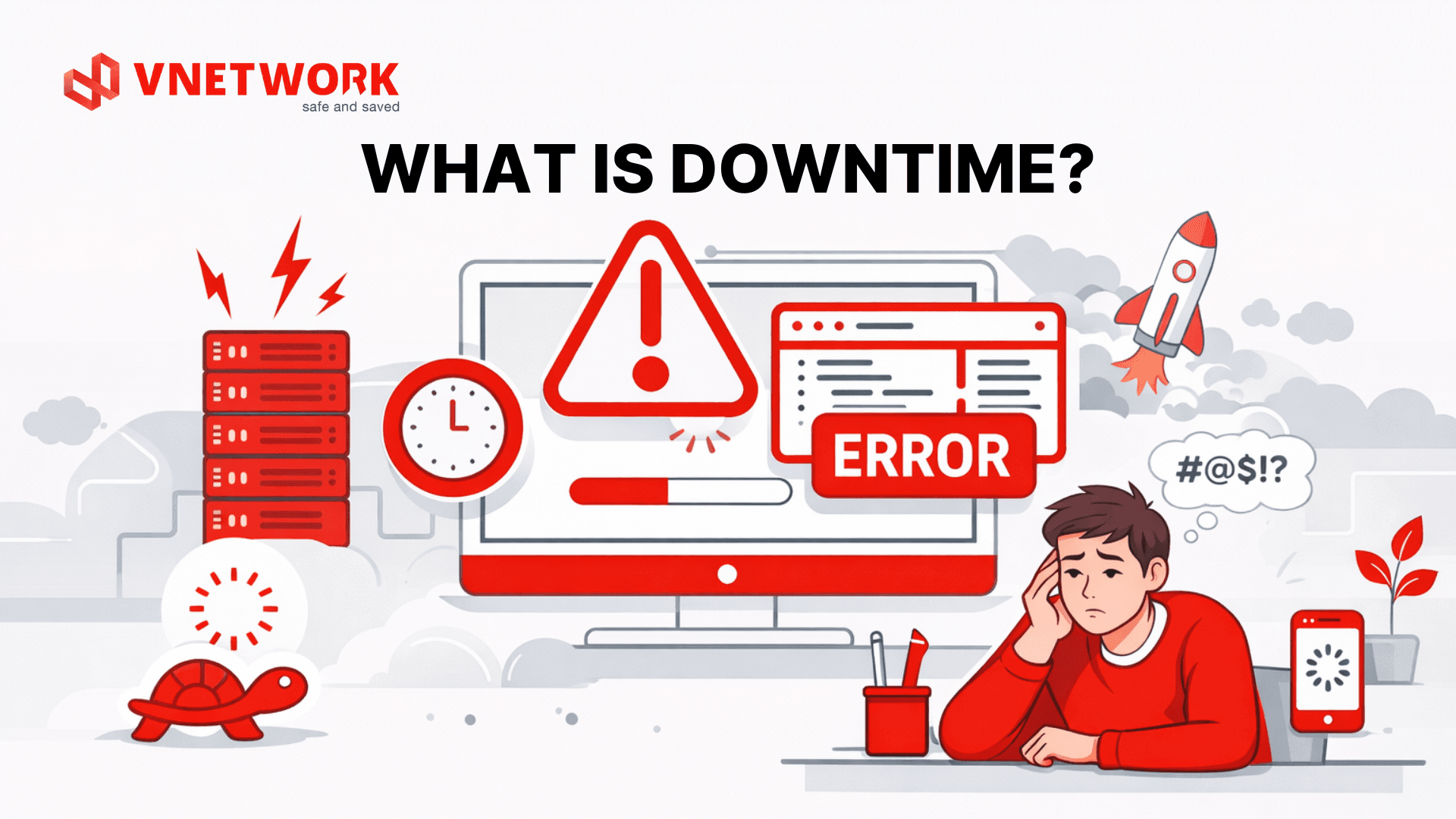
Specifically, users typically encounter the following scenarios during downtime:
- The website or application fails to load: Users attempting to access it see a blank screen, error messages (such as HTTP 500, 502, or 503), or a browser that hangs indefinitely without rendering content. This is the most common sign of full downtime.
- Critical transactions and operations fail: In e-commerce platforms, digital banking, SaaS applications, or payment gateways, downtime can prevent logins, order placements, payments, form submissions, or API calls, breaking core business workflows.
- The system becomes slow, hangs, or experiences intermittent errors: Downtime is not limited to complete outages. In many cases, the service remains partially accessible but responds very slowly, frequently times out, stalls tasks, or generates random errors, severely degrading user experience.
- User trust erodes due to interrupted experiences: Unstable access, recurring errors, or prolonged poor performance drive users away to competitors and create lasting negative perceptions of the system's reliability.
In today's landscape, downtime extends beyond simple "website crashes" to include any significant performance degradation that renders the service unusable in practice. In an era where digital services run 24/7, even a few minutes of downtime can result in substantial revenue loss, reputational harm, and data-related impacts.
2. The Cloudflare Incident: A Wake-Up Call for Global Downtime Risks
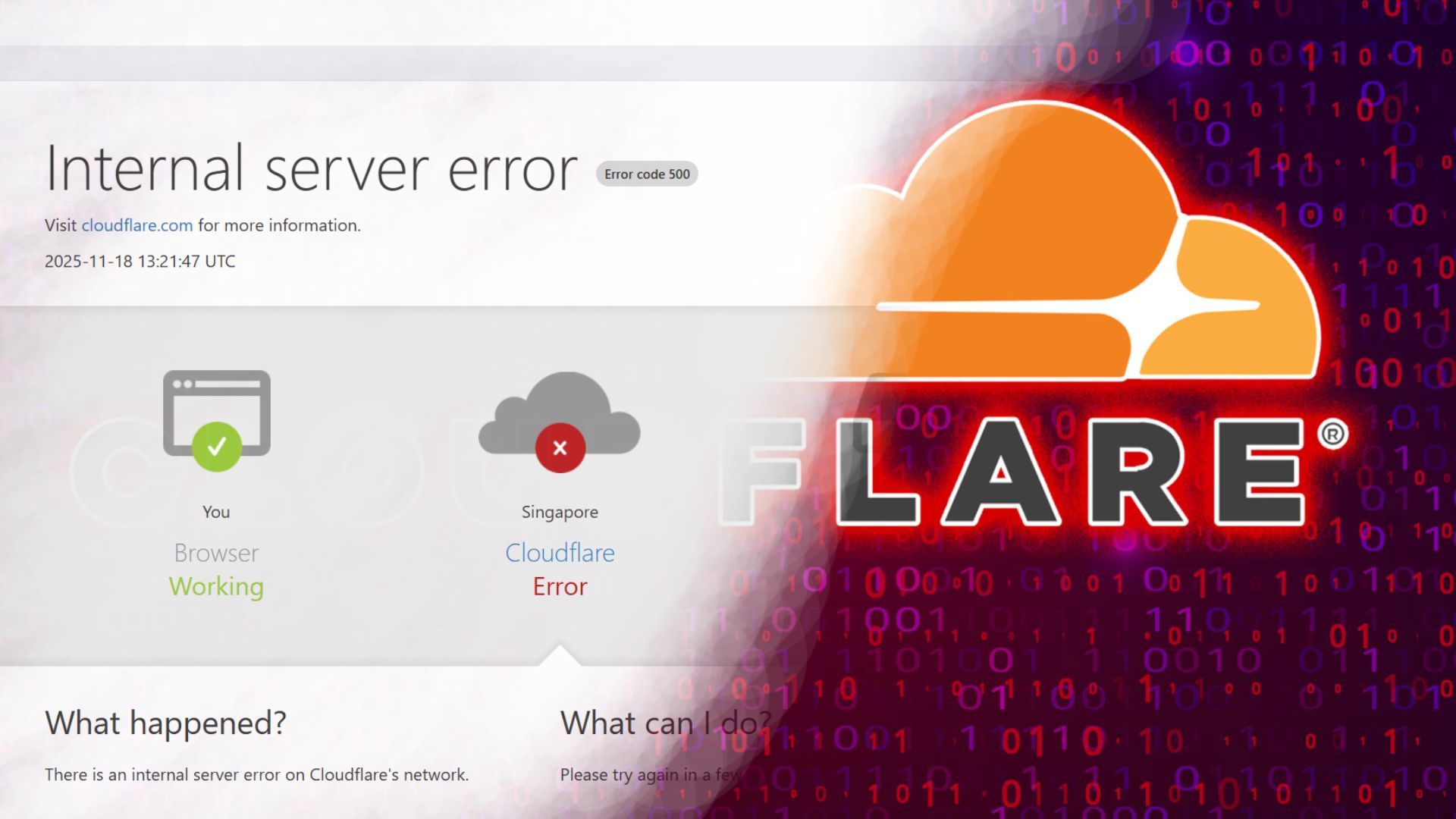
On the evening of November 18, 2025, the global tech community witnessed a rare event: Cloudflare experienced a major outage that caused widespread disruptions. Major platforms including X (formerly Twitter), Canva, ChatGPT, Grok, Claude, and Downdetector became inaccessible or unstable for users worldwide.
According to Cloudflare's official postmortem, the incident stemmed from a bug in the generation logic for a Bot Management feature file. A change in database permissions led to an oversized configuration file (doubling in size due to duplicated entries), which exceeded internal limits when propagated across the network. This triggered crashes in traffic-handling components, resulting in widespread HTTP 500 errors.
Notably, the outage coincided with maintenance activities across several major data centers, highlighting risks when core infrastructure faces pressure without sufficiently flexible internal load distribution.
This event demonstrated that downtime is no longer just a localized issue; it can cascade globally in minutes. When foundational infrastructure fails, dependent services suffer immediate and broad interruptions, causing websites to lose accessibility, systems to return errors, and user experiences to degrade sharply. This underscores the modern reality of downtime: rapid onset, wide reach, and instantaneous business impact.
Understanding downtime and proactively building multi-layered resilience has become essential for any organization operating in the digital space.
3. Downtime vs. Website Crash: Key distinctions to avoid confusion
Many people use "downtime" and "website crash" interchangeably, but they represent distinct failure states with different scopes, detectability, and remediation approaches. Confusing the two can lead to underestimating risks and delayed responses to serious threats.
| # | Criterion | Downtime | Website Crash |
| 1 | Scope of Impact | Can be partial or localized: affecting specific features, APIs, regions, or user groups | Typically affects the entire website or system; no users can access it |
| 2 | Operational State | Website remains "alive" but unstable: slow loading, intermittent errors, timeouts, incorrect responses | Completely inaccessible; browser returns errors immediately |
| 3 | Detectability | Harder to spot: not always obvious errors; some users succeed while others fail | Immediately noticeable: widespread and simultaneous for users and teams |
| 4 | Common Causes | Resource overload, DDoS attacks, CDN/DNS misconfigurations, unsynchronized maintenance, regional network issues | Severe server failures, backend crashes, physical infrastructure issues |
| 5 | Duration | Can persist quietly for hours or days without strong monitoring | Usually resolved faster due to high visibility and severity |
| 6 | Business Impact | Erodes user experience, reduces conversions, harms SEO, causes hidden revenue loss | Causes total disruption, but often shorter-term |
| 7 | Long-Term Effects | Severely damages brand trust and search rankings if recurrent | Less SEO impact if fixed quickly and infrequently |
In summary, a website crash resembles a major, visible accident, while downtime acts like a chronic condition: subtle, hard to detect early, with cumulative and recurring damage.
In increasingly complex digital infrastructures, downtime represents a genuine business risk that organizations must identify and mitigate proactively.
4. How website downtime causes damage
Websites serve as direct touchpoints and revenue drivers in the digital economy. Any downtime, even brief, creates tangible short- and long-term losses.
4.1. Revenue and customer loss
When downtime occurs, key activities like ordering, payments, service sign-ups, or inquiries halt. Minutes of unresponsiveness can cancel orders, fail transactions, and push customers to competitors, especially in highly competitive sectors like e-commerce or SaaS.
4.2. Severe user experience degradation
Slow loading, intermittent errors, or frozen features frustrate users. Repeated negative experiences increase bounce rates, reduce return visits, and foster perceptions of unprofessionalism and unreliability.
4.3. SEO ranking drops and reduced visibility
Google prioritizes stable, fast-responding, always-available sites. Frequent downtime hinders search engine crawlers, triggers crawl errors, and lowers organic rankings, traffic, and long-term marketing performance.
4.4. Increased operational and crisis costs
Each incident incurs hidden expenses: emergency team mobilization, external experts, infrastructure scaling, or customer compensation. Recurrent downtime often costs far more than preventive investments.
Ultimately, downtime is not merely a technical issue but a direct threat to revenue, brand reputation, and business viability. Early detection and proactive control are critical for any modern website or digital platform.
5. Common causes of website downtime
Downtime rarely happens randomly; it typically arises from interconnected technical and operational factors. Recognizing these helps organizations prevent and mitigate risks effectively.
.png)
5.1. Human error
Mistakes during code updates, new feature deployments, or DNS configurations can render sites inaccessible. This remains the most frequent cause, especially without strict change management processes.
5.2. Hardware and infrastructure failures
Server, network device, or data center issues without redundancy lead to immediate downtime. Single points of failure amplify risks dramatically.
5.3. Cyber attacks, especially DDoS
DDoS floods overwhelm systems with fake traffic, blocking legitimate users. This growing threat is hard to counter without dedicated defenses.
5.4. Sudden traffic spikes
Major marketing campaigns, live events, or viral content can exceed capacity. Without elastic scaling, sites slow down, error out, or go offline.
Downtime often results from compounded factors involving people, infrastructure, and security. Building stable, redundant, and auto-responsive systems is the only reliable way to limit it.
6. Strategies to minimize website downtime
Downtime arises not only from isolated incidents but from suboptimal architecture and lack of proactive safeguards. Effective reduction requires layered, integrated solutions rather than reactive fixes.
6.1. Implement a CDN (Content Delivery Network)
A CDN ranks among the most powerful tools for reducing downtime, particularly during traffic surges or origin failures. Instead of routing all users to a single origin server, a CDN caches and distributes content across global edge servers.
Users are automatically directed to the nearest, healthiest node, shortening load times and easing origin pressure. This prevents overload, a primary downtime trigger.
Key CDN benefits include:
- Offloading origin servers: Most traffic is handled at the edge, reducing congestion or crashes.
- Maintaining availability during origin issues: Cached content serves even if the origin is temporarily down.
- Handling peak loads reliably: Marketing spikes, events, or viral moments no longer risk downtime.
A CDN forms the first line of infrastructure defense, ensuring consistent performance and resilience.
6.2. Continuous uptime monitoring
Real-time monitoring tools probe the site periodically, detecting anomalies early and alerting teams instantly upon downtime detection.
6.3. Combine intelligent security and load balancing
Monitoring alone is insufficient. Modern websites require:
- Smart traffic distribution
- Early blocking of malicious access
- Protection for applications and APIs against sophisticated attacks
Reducing downtime involves building a resilient system with load distribution, monitoring, and self-protection. When performance and security layers align, websites achieve continuous availability, safeguarding user experience and brand trust long-term.
7. VNCDN - Reducing downtime at the infrastructure level
A comprehensive downtime strategy hinges on robust content delivery infrastructure. Even well-optimized applications risk interruption if the distribution layer cannot handle load.
VNCDN, VNETWORK's CDN solution, addresses this by minimizing downtime from the ground up. By serving content from the nearest edge server, VNCDN offloads the majority of traffic, relieves origin pressure, and sustains stable access during peaks or origin issues.
.png)
Key advantages of VNCDN:
- Over 2,300+ Points of Presence (PoPs) across 146 countries for broad coverage and low latency.
- Up to 200 Tbps international bandwidth, ready for sudden surges without bottlenecks.
- Origin Shield enables edge serving of cached content during temporary origin failures.
- Real-time intelligent routing directs users to the optimal-performing node.
With multi-server, multi-region distribution, VNCDN enhances fault tolerance, reduces lag, prevents crashes, and delivers smooth experiences even under stress or origin problems.
8. VNIS: AI-Powered shield against downtime
While VNCDN tackles performance and delivery, VNIS focuses on security-driven downtime from increasingly sophisticated attacks. With rising DDoS, vulnerability exploits, and API abuses, lacking proactive defenses can cause minutes-long interruptions.
.jpg)
- AI-powered WAF: Combines artificial intelligence with over 2,400 continuously updated OWASP Top 10 rules to detect and block anomalies in real time.
- API Protection: Safeguards backend and critical data flows against exploitation, a leading cause of modern service disruptions.
- 24/7 SOC and expert team: Continuous monitoring, incident analysis, and immediate response to minimize downtime windows.
- Multi-CDN with AI Load Balancing: Intelligently distributes traffic, eases origin load, and maintains smooth performance during attacks.
By integrating proactive security, constant monitoring, and smart balancing, VNIS keeps customer data secure and operations continuous, allowing businesses to focus on growth without security or downtime concerns.
9. Real-World case study: VNETWORK blocks layer 7 DDoS Attack, preventing downtime
Recently, VNETWORK successfully mitigated a massive Layer 7 DDoS attack targeting the application layer, where unprotected systems are most vulnerable to downtime. The goal was to exhaust application resources, causing slowdowns, hangs, and eventual failure.
Attack metrics included:
- Peak of over 550,000 requests per second, placing extreme pressure on the application tier.
- Bandwidth reaching 967.51 Mbps, sufficient to overwhelm without defense.
- More than 1.1 billion HTTPS requests in a short burst, threatening sustained operation.
Upon detecting anomalies, VNETWORK's SOC and VNIS automatically analyzed and activated defenses, blocking malicious traffic in real time. The client's website experienced no downtime, no service interruptions, and zero losses.
According to the Nexusguard 2025 DDoS Trends Report:
- Average attack sizes grew 69% year-over-year.
- HTTPS Floods accounted for 21% of attacks, targeting application layers directly.
- DNS attacks surged 876%, endangering network infrastructure and site accessibility.
These trends confirm that DDoS-driven downtime is a present threat, not a hypothetical one. Without early detection and automated response, a single attack can cause prolonged outages.
Conclusion
The Cloudflare incident proves that downtime can strike anyone, even the largest platforms. For sustainable growth, businesses must adopt multi-layered defenses: VNCDN for performance reliability and VNIS for AI-driven comprehensive protection. This combination ensures websites remain stable, secure, and resilient amid digital volatility.
FAQ – Frequently asked questions about downtime
1. What is downtime, and how does it differ from a website crash?
Downtime refers to unstable or partially unusable operation, while a crash means total inaccessibility. Downtime is more insidious because it is harder to detect yet causes prolonged damage.
2. Why did the Cloudflare incident affect so many major websites?
Many platforms rely on the same core CDN infrastructure. A failure at the foundation disrupts all dependent services.
3. Does a CDN help reduce downtime?
Yes. By distributing content across multiple servers, a CDN reduces load and increases fault tolerance for greater stability.
4. How does VNIS differ from traditional security solutions?
VNIS leverages AI for behavioral analysis, prediction, and real-time blocking, going beyond static rules.
5. Should small businesses care about downtime?
Absolutely. Downtime affects organizations of all sizes. Early proactive protection prevents disproportionately large future losses.