---
title: What is a honeypot? How honeypots protect enterprise systems
description: What is a honeypot? Learn how it works, its types, benefits, risks, and how to deploy it effectively to detect cyberattacks early.
slug: honeypot-la-gi
type: news
locale: en-US
author: Martha Tran
date: "2026-08-24T09:56:46.101Z"
lastmod: "2026-08-24T09:56:45.962Z"
thumbnail: "https://static.vncdn.vn/vnetwork.vn/pub/websites/uploads/1/92/what-is-honeypot-thumb.png"
sabo: Before a real attack takes place, threat actors usually scan systems to find weaknesses they can exploit. Honeypots exist to get ahead of that reconnaissance step by setting up a decoy target that looks like a genuine system, attractive enough for attackers to fall into the trap. In this article, VNETWORK explains what a honeypot is, how it works, the common honeypot types, the benefits, the risks and what to consider before deploying a honeypot for enterprise systems.
---

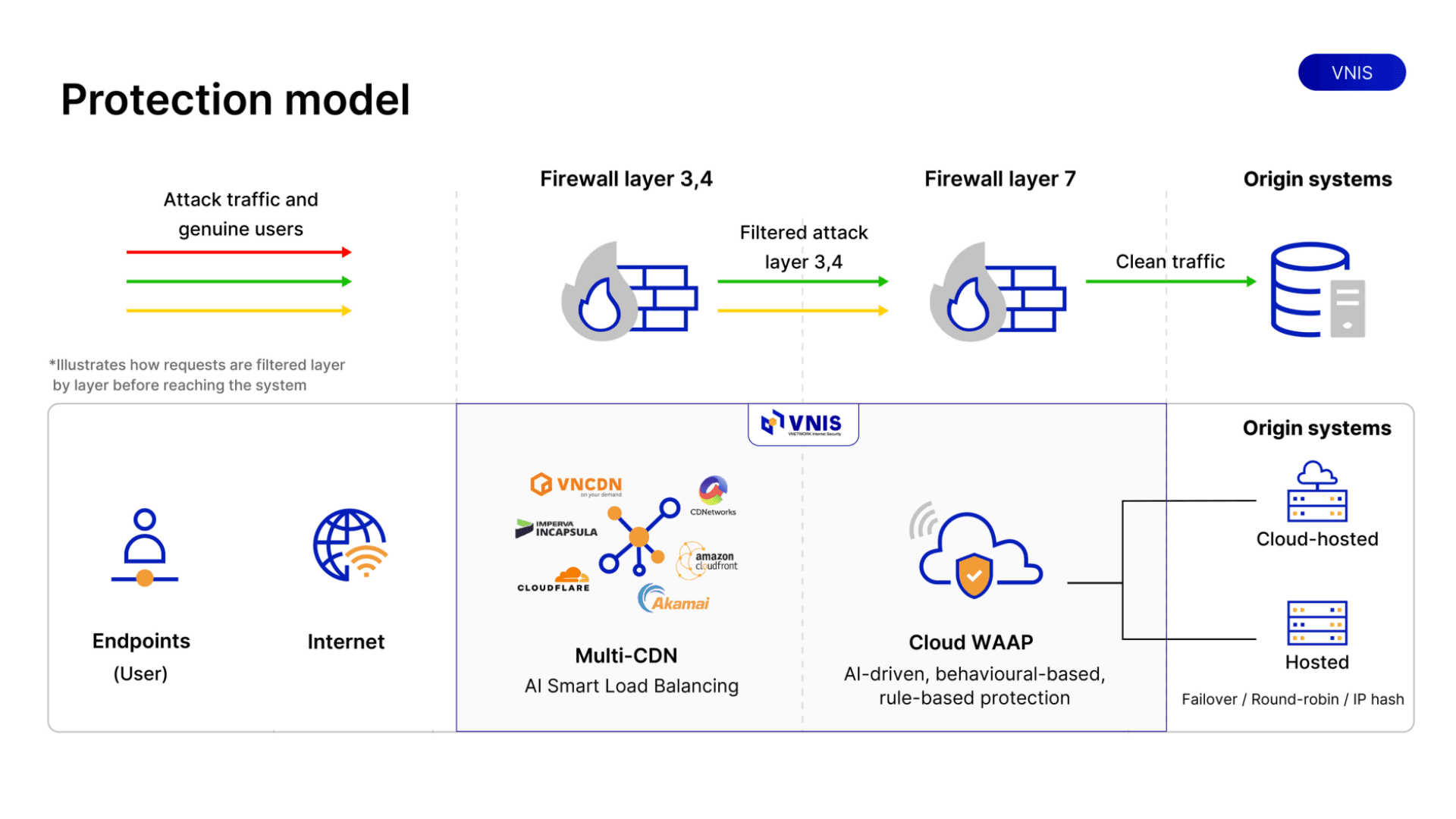
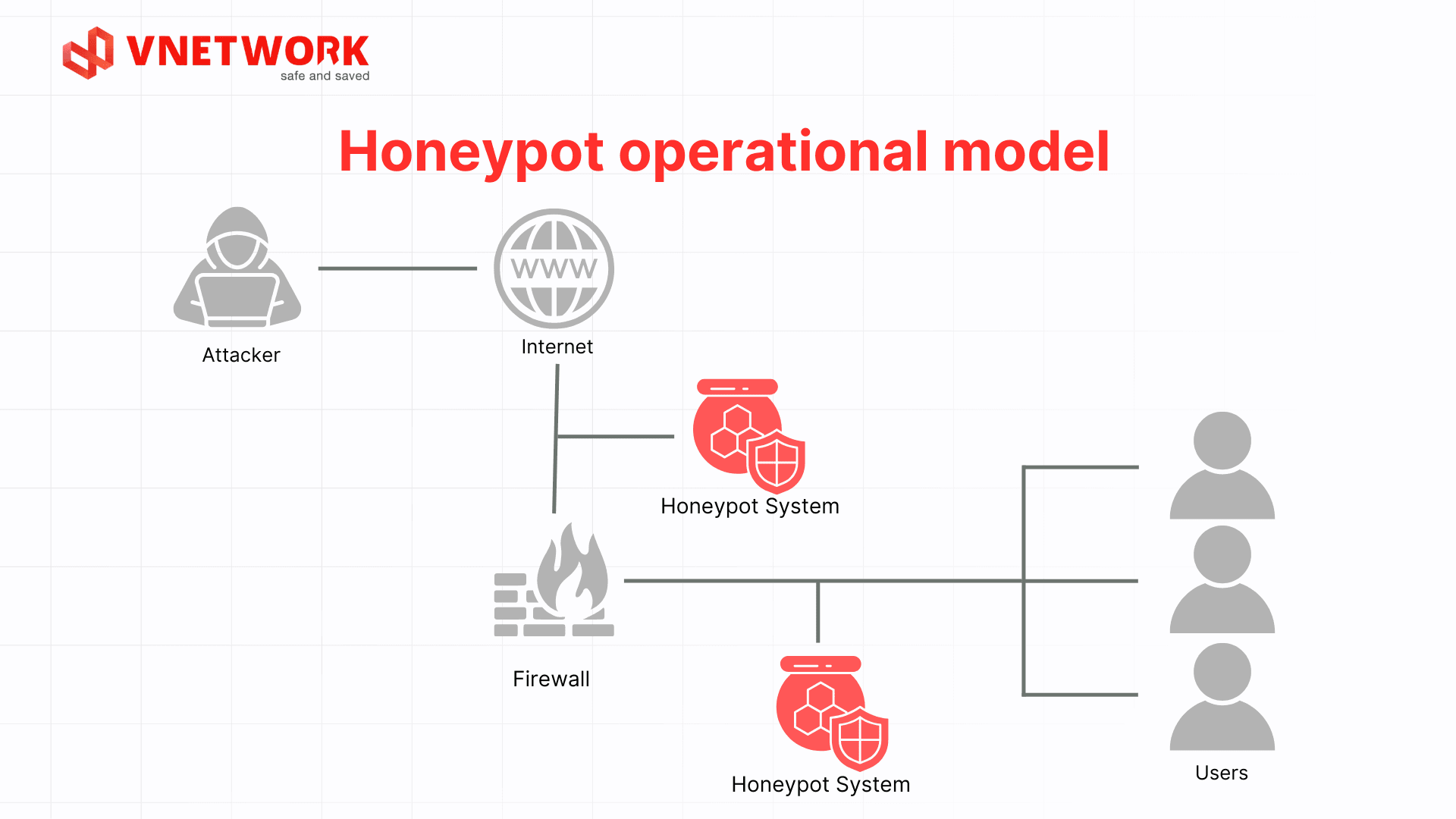
<h2><strong>1. What is a honeypot?</strong></h2><p>A honeypot is a system, server or service built to look like a genuine target while remaining completely isolated from production systems. It acts as bait, convincing attackers that they are breaking into a valuable resource when in reality every action they take is monitored and recorded.</p><p>Unlike a <a href="https://www.vnetwork.vn/en-US/news/firewall-la-gi/">firewall</a>, which focuses on blocking attacks from the outset, a honeypot is not designed to protect or block anything directly. Its purpose is to observe and gather data about the tools, techniques and objectives of attackers, providing valuable intelligence that security teams can use to harden real systems.</p><p>The honeypot concept emerged in the 1990s as a cybersecurity research tool. Over time, honeypots evolved from simple models into systems capable of automating the collection and analysis of attack data, and they are now widely used in both research and day to day enterprise operations. Depending on the intended use, a honeypot can be very simple or highly sophisticated, sophisticated enough to fool even experienced attackers.</p><h2><strong>2. How does a honeypot work?</strong></h2><p>The way a honeypot operates can be described through the following main steps:</p><ul><li><strong>Simulating a real system:&nbsp;</strong>The honeypot is built to resemble an actual system, complete with fake applications and data, in order to deceive attackers who are looking for a target.</li><li><strong>Creating decoy data:&nbsp;</strong>It can emulate stores of sensitive data such as payment card details or personally identifiable information, attracting attackers who intend to steal or exploit that data.</li><li><strong>Deliberately exposing weaknesses:&nbsp;</strong>A honeypot may leave certain ports easy to spot during a network scan, emulate common services or create fake vulnerabilities that attackers typically look for.</li><li><strong>Monitoring attack behavior:&nbsp;</strong>Once an attacker breaks in, the security team can observe and record the techniques and attack methods being used.</li><li><strong>Strengthening defenses:&nbsp;</strong>The data collected from a honeypot helps the organization understand attack methods, assess the strengths and weaknesses of its defensive systems and improve overall network protection.</li></ul><p><img src="https://static.vncdn.vn/vnetwork.vn/pub/websites/uploads/1/92/what-is-honeypot-1a.png" alt="what-is-honeypot-1a.png"></p><p>Another important factor is that honeypots are usually isolated from the main system through a separate network, a firewall or a sandbox mechanism. As a result, even if a honeypot is fully compromised, attackers cannot use it as a springboard to reach other critical resources. In most cases, the honeypot sits behind the organization’s firewall, allowing the security team to observe attacks that have already made it past the outermost layer of defense.</p><p>If your organization needs a proactive layer of protection that can be set up quickly without having to run a complex honeypot infrastructure of your own, VNETWORK WAF Free is a suitable starting point.</p><p>Button;Try it now;https://partner.vnetwork.vn/en-US/?utm_source=google&amp;utm_medium=blog&amp;utm_campaign=waf_free&amp;utm_term=honeypotlagi;_blank</p><h2><strong>3. Common types of honeypots</strong></h2><p>Depending on the level of interaction and the purpose of deployment, honeypots fall into several categories:</p><h3><strong>3.1. Honeypots by level of interaction</strong></h3><ul><li><strong>Low-interaction honeypot:&nbsp;</strong>Emulates a small portion of the functionality of a real service or system. This type is easy to deploy and consumes few resources, but it cannot hold an attacker’s attention for long, making it suitable for detecting automated attacks.</li><li><strong>Mid-interaction honeypot:&nbsp;</strong>Emulates part of the application layer without a real operating system underneath. The goal is to deceive and delay attackers so that they lose time probing, giving the security team more room to respond before damage occurs.</li><li><strong>High-interaction honeypot:&nbsp;</strong>Provides real operating systems, services and databases, allowing attackers to interact deeply and carry out more complex actions. This gives research teams the chance to observe the entire privilege escalation process and the attacker’s true objective.</li><li><strong>Pure honeypot:&nbsp;</strong>A large scale system running on multiple real servers that replicates an entire production infrastructure, along with simulated user data made to look like sensitive information. Such systems are typically fitted with numerous sensors to closely track every attacker action.</li></ul><h3><strong>3.2. Honeypots by deployment purpose</strong></h3><ul><li><strong>Production honeypot:&nbsp;</strong>Focuses on identifying security vulnerabilities inside the corporate network and on deceiving attackers who are targeting real resources. A production honeypot is placed alongside production servers to strengthen security monitoring, which makes it a good fit for small and medium businesses that want an extra layer of visibility without complicating their infrastructure.</li><li><strong>Research honeypot:&nbsp;</strong>Focuses on collecting and studying information about new techniques, tools and attack trends. This type gathers threat intelligence to support research and to improve long term defense strategies. Research honeypots deliver significant value to the cybersecurity community. However, because they require in depth analysis, they usually have a complex architecture with advanced logging and data analysis systems, which makes them unsuitable for widespread deployment.</li></ul><h2><strong>4. Honeypot formats and how they work</strong></h2><h3><strong>4.1. Malware honeypot</strong></h3><p>A malware honeypot is designed to detect and study the distribution, intrusion or execution behavior of malicious code. The system emulates a vulnerable environment, such as a server or device running common services, in order to attract <a href="https://www.vnetwork.vn/en-US/news/malware-la-gi/">malware</a>.</p><p>When malicious code gets in, the honeypot records activity such as the infection method, connections to command and control (C&amp;C) servers, the files that are created and the actions the malware performs.</p><p><img src="https://static.vncdn.vn/vnetwork.vn/pub/websites/uploads/1/92/what-is-honeypot-2.png" alt="what-is-honeypot-2.png"></p><h3><strong>4.2. Spam honeypot (spam trap)</strong></h3><p>A spam honeypot, or spam trap, uses email addresses that are not used for normal communication but are set up to identify junk mail.</p><p>These addresses may be placed in locations where bots or spammers can easily harvest them. When an email arrives, the system records information about the sender, the content, the timing and the characteristics of the message, then blocks the junk mail those senders attempt to deliver.</p><h3><strong>4.3. Database honeypot</strong></h3><p>A database honeypot creates fake databases holding information that looks attractive to attackers, such as account credentials, customer records or simulated business data, in order to draw in attacks aimed at databases, for example <a href="https://www.vnetwork.vn/en-US/news/chong-tan-cong-sql-injection/">SQL injection</a>.</p><p>When an attacker tries to exploit the database, the system records the behavior and the techniques being used.</p><h3><strong>4.4. Client honeypot</strong></h3><p>Unlike honeypot types that passively wait for attackers to come to them, a client honeypot actively visits and interacts with external websites or servers in order to identify environments that show signs of danger.</p><p>The system can emulate the behavior of a user browsing a website, then watch for unusual activity such as automatic malware downloads, browser vulnerability exploitation or redirection to malicious pages.</p><p>Client honeypots are particularly useful for detecting malicious websites and researching attack techniques aimed at end users.</p><h3><strong>4.5. Honeynet</strong></h3><p>A honeynet is a network of multiple honeypots working together, which makes it possible to study several types of attacks at once, including denial of service attacks (<a href="https://www.vnetwork.vn/en-US/news/ddos-la-gi-va-cach-ngan-chan-cac-loai-tan-cong-ddos-server/">DDoS</a>), attacks on content delivery networks (<a href="https://www.vnetwork.vn/en-US/news/cdn-la-gi-va-6-loi-ich-dac-biet-cua-cong-nghe-cdn/">CDN</a>) and ransomware attacks (<a href="https://www.vnetwork.vn/en-US/news/6-loai-hinh-ransomware-pho-bien-doanh-nghiep-can-biet-nam-2024/">ransomware</a>). All traffic entering and leaving the honeynet is tightly controlled to protect the rest of the organization’s systems.</p><h2><strong>5. Benefits of honeypots in enterprise security</strong></h2><p>Honeypots deliver a number of benefits that security teams can use to raise their overall cybersecurity posture:</p><ul><li><strong>Early threat detection:&nbsp;</strong>Honeypots help security teams spot scanning or attack signals before threat actors reach real systems, including automated scans from <a href="https://www.vnetwork.vn/en-US/news/botnet-la-gi-cach-phong-chong-ddos-botnet-check-botnet-2022/">botnets</a>.</li><li><strong>Analyzing the attacker’s kill chain:&nbsp;</strong>Honeypots record the full behavior, tooling and techniques of attackers, helping security teams uncover emerging threats and intrusion methods and improve the organization’s security strategy.</li><li><strong>Protecting real systems:&nbsp;</strong>By acting as a decoy target, a honeypot reduces the likelihood that attackers will reach production systems, keeping enterprise infrastructure safe. Honeypots also disrupt the attack chain by luring attackers into spending time chasing worthless information instead of the sensitive targets that hold real value.</li><li><strong>Supporting incident response testing:&nbsp;</strong>Honeypots are an effective way to test how enterprise systems respond to a threat without disrupting operations.</li></ul><p><img src="https://static.vncdn.vn/vnetwork.vn/pub/websites/uploads/1/92/what-is-honeypot-3.png" alt="what-is-honeypot-3.png"></p><h2><strong>6. Risks and limitations of deploying honeypots</strong></h2><p>Although honeypots help surface threats, they are not a complete shield:</p><ul><li><strong>No comprehensive protection:&nbsp;</strong>A honeypot cannot detect an attack running in parallel on real systems. If attackers never touch the honeypot, that attack remains entirely invisible to it.</li><li><strong>Risk of being turned against you:&nbsp;</strong>Honeypots, and high-interaction honeypots in particular, require careful configuration and close monitoring. Without proper isolation, hackers can take advantage of them to launch attacks back at the organization.</li><li><strong>Misleading information:&nbsp;</strong>Experienced attackers may recognize a honeypot and deliberately feed it false data, leading the security team to the wrong conclusions.</li><li><strong>Operational cost:&nbsp;</strong>For high-interaction honeypots and honeynets in particular, monitoring and maintenance demand dedicated staff on a continuous basis.</li></ul><p><img src="https://static.vncdn.vn/vnetwork.vn/pub/websites/uploads/1/92/what-is-honeypot-4.png" alt="what-is-honeypot-4.png"></p><p>Overall, honeypots can help organizations detect early signs of an attack and better understand the techniques threat actors use, but a honeypot on its own cannot stop an attack that is already underway on real systems. With VNETWORK WAF Free, organizations can proactively deploy a layer of protection capable of detecting and blocking attacks in real time.</p><p>Button;Try it now;https://partner.vnetwork.vn/en-US/?utm_source=google&amp;utm_medium=blog&amp;utm_campaign=waf_free&amp;utm_term=honeypotlagi;_blank</p><h2><strong>7. VNIS: Web/App/API security solution</strong></h2><p>With more than 13 years in operation, VNETWORK is proud to be a leading cybersecurity and digital infrastructure provider in Vietnam. VNETWORK is the trusted partner of more than 2,000 businesses across finance, banking, entertainment, education and other sectors. With a deep understanding of how enterprises operate and of the specific security pressures they face, VNETWORK delivers VNIS to protect enterprise systems as comprehensively as possible against increasingly sophisticated cyberattacks.</p><p>VNIS (VNETWORK Internet Security) is a Web/App/API security solution created with AI at its core, where AI is not merely a supporting tool but plays a central role in building the solution, predicting, identifying and defending against increasingly sophisticated cyberattacks.</p><p>VNIS comes with the following features:</p><ul><li><strong>AI-powered WAF:&nbsp;</strong>The <a href="https://www.vnetwork.vn/en-US/news/waf-la-gi/">Web Application Firewall (WAF)</a> feature in VNIS is built on more than 2,400 rulesets and can detect and block every variant of the attack payloads used to exploit security vulnerabilities. The WAF operates at the application layer, inspecting the entire content of an HTTP request before it reaches the backend server, so attacks are blocked even when the origin system has not yet been patched.</li><li><strong>Honeypot protection:&nbsp;</strong>VNIS uses trap tools (honeypots) discreetly embedded in the traffic flow to identify automated and malicious clients. When an attacker interacts with a honeypot, the system logs that behavior as an anomaly and takes action, allowing accurate separation between genuine users and automated tools attempting to scan for or exploit vulnerabilities.</li><li><strong>AI Smart Load Balancing combined with Multi-CDN&nbsp;</strong>to defend against Layer 3/4 DDoS and distribute traffic across a global PoP network without the need for separate deployments.</li></ul><figure class="image"><img style="aspect-ratio:1920/1080;" src="https://static.vncdn.vn/vnetwork.vn/pub/websites/uploads/1/92/what-is-honeypot-5a.png" alt="what-is-honeypot-5a.png" width="1920" height="1080"><figcaption><i>VNIS: Web/App/API security solution</i></figcaption></figure><h2><strong>8. Conclusion</strong></h2><p>A honeypot is a useful tool that helps organizations take a more proactive approach to detecting, observing and studying attack behavior, and to drawing lessons that strengthen their defenses. However, it is not a complete security solution. A honeypot does not block attacks directly, does not protect the parts of the system that attackers never touch, and requires continuous operational resources and monitoring in order to be effective.</p><p>Organizations also need additional proactive layers such as WAF, DDoS protection and real time traffic monitoring to keep their systems comprehensively safe, rather than relying on a honeypot as their only line of defense. Combining honeypots with solutions such as VNIS allows organizations to detect threats early while actively blocking attacks before they cause real damage.</p><p>There is no need to wait for a large budget. Enterprises can start with the WAF Free package in the VNIS ecosystem today: free of charge, easy to integrate and ready to upgrade to more comprehensive protection packages as traffic grows.</p><p>Button;Try it now;https://partner.vnetwork.vn/en-US/?utm_source=google&amp;utm_medium=blog&amp;utm_campaign=waf_free&amp;utm_term=honeypotlagi;_blank</p><h2><strong>FAQ: Frequently asked questions about honeypots</strong></h2><h3><strong>1. Can a honeypot replace a firewall?</strong></h3><p>No. A honeypot only observes and gathers information about attackers, while a firewall is responsible for blocking malicious traffic from reaching the system in the first place. The two should be deployed side by side as part of a layered defense strategy.</p><h3><strong>2. Are honeypots legal?</strong></h3><p>Deploying a honeypot within systems that a business owns and manages is legal in most countries, because the honeypot only records the behavior of attackers who deliberately intrude without authorization. However, organizations must ensure that the collection and storage of that data complies with the cybersecurity and data protection regulations that apply in their operating region.</p><h3><strong>3. Should small businesses use honeypots?</strong></h3><p>Small businesses can consider deploying a low-interaction honeypot, since the operating cost is low and it does not require significant monitoring staff. That said, a honeypot should only be an additional layer added once foundational security solutions such as a firewall or WAF are already in place.</p><h3><strong>4. How is a honeynet different from a honeypot?</strong></h3><p>A honeypot is a single decoy system, whereas a honeynet is a network of multiple interconnected honeypots that simulates a more complex network environment. A honeynet makes it possible to study several types of attacks at the same time and to observe how attackers move between systems.</p>