The line between “good enough” protection and comprehensive protection for web and API has shifted significantly in recent years. Microservices architecture and the API first model mean that a traditional WAF, which only filters HTTP/HTTPS traffic at the application layer, is no longer enough to cover attacks aimed at APIs. Every new API opens up a new point of contact for attackers, which is why WAAP is drawing increasing attention from businesses.
For organizations that handle customer data, financial transactions, or operate through APIs, choosing the right WAAP solution directly affects brand reputation and regulatory compliance, not just a technical decision. Priorities also vary by scale: e-commerce platforms need to handle traffic spikes well without blocking real customers, financial institutions place heavy emphasis on protecting transaction APIs, and small businesses deploying security for the first time tend to prioritize a platform that is easy to configure and comes with support.
A reliable WAAP solution needs the ability to automatically discover the APIs running in a system, including “shadow” APIs that the development team forgot to document. After discovery, the platform needs to analyze API call behavior to identify attack patterns specific to APIs, such as business logic abuse, unauthorized access to data objects, or exploitation of endpoints listed in the OWASP Top 10, rather than relying solely on filtering by known attack signatures.
DDoS and botnet attacks increasingly combine multiple techniques to evade simple rate limiting, from mimicking real user behavior to spreading attack sources across a wide area. A good WAAP solution needs to handle both the network layer and the application layer at the same time, while also telling apart a legitimate traffic spike (for example, during a sales season) from a genuine attack, so it does not end up blocking real customers.
Want to check how well your website or web application is currently protected against these layers of attack?
Button;Sign up;https://partner.vnetwork.vn/?utm_source=google&utm_medium=blog&utm_campaign=waf_free&utm_term=topgiaiphapwaap;_blank
Businesses running purely on cloud, on-premise, or a hybrid of both need different deployment models. Some platforms only perform well in public cloud environments, while others also support physical appliances for sensitive internal systems. Clearly defining your current infrastructure model and your expansion plans for the next two to three years will help narrow the list of options faster.
A security layer sitting in front of an application can become a bottleneck that slows down the entire user experience if it is not processed efficiently. When evaluating a solution, businesses should check the actual latency it adds to each request, its ability to integrate with a CDN to shorten the physical distance to end users, and how the system handles traffic under attack without taking down legitimate service along with it.
The initial list price of a WAAP solution rarely reflects the actual operating cost. Many vendors split off fees for advanced DDoS protection, advanced bot protection, and managed services into add-on packages, which can raise the total cost significantly compared with the starting price. Businesses should ask for a detailed quote for the exact scope of protection they need, rather than comparing only the advertised prices on a vendor's homepage.
These five criteria do not exist independently of one another. A platform that is strong on API protection but exceeds the budget, or one that deploys quickly but lacks real DDoS protection, will struggle to meet long term needs. The list of WAAP solutions below is organized so businesses can compare them directly against the criteria above.
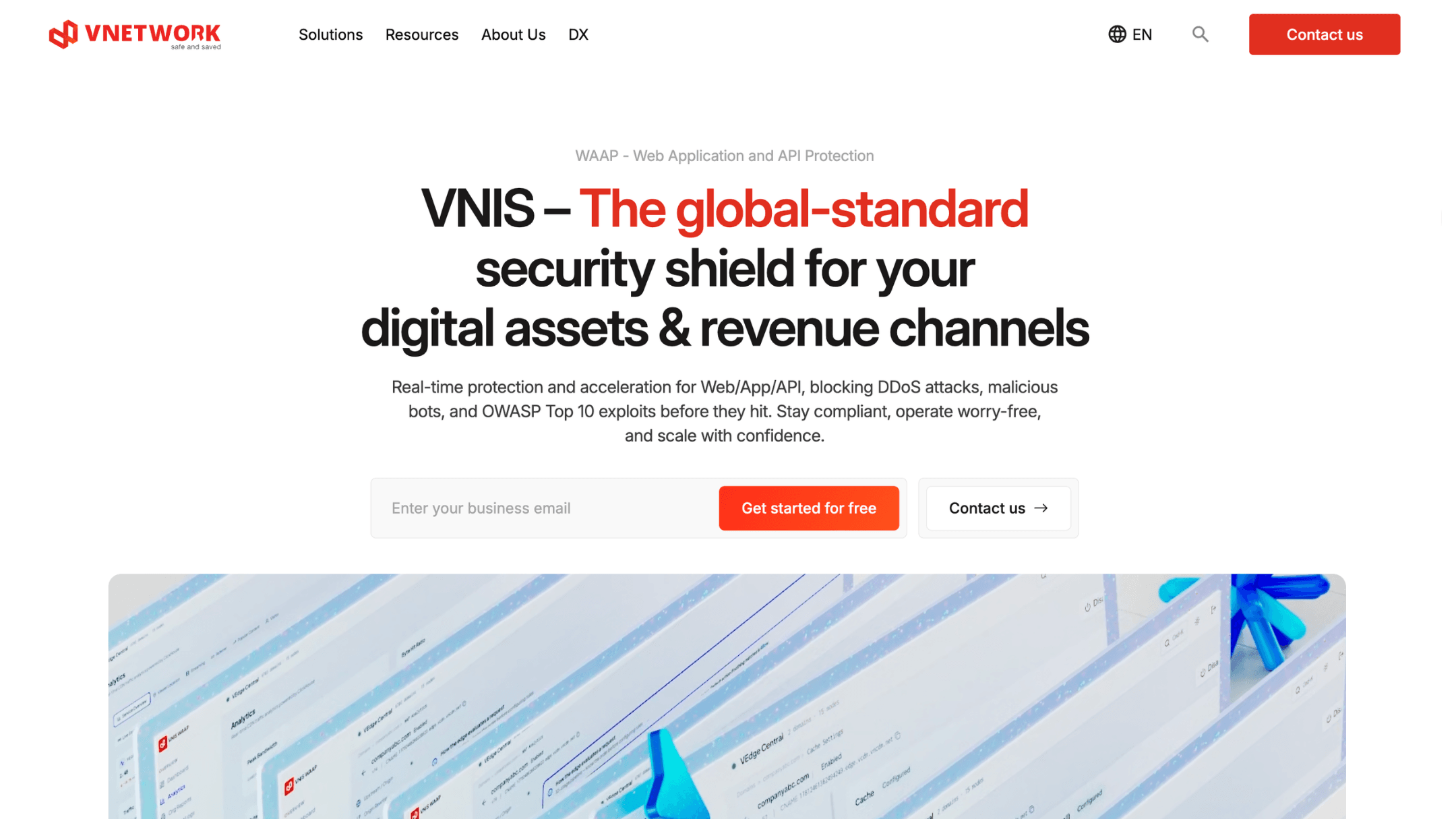
VNIS (VNETWORK Internet Security) is VNETWORK's WAAP platform. VNETWORK has more than 13 years of experience in cybersecurity and technology infrastructure and currently protects more than 2,000 customers in Vietnam, including VTV, THVL, VOV, HSC, ACBS, and Momo. The platform integrates AI powered WAF, multi-layer DDoS protection, and API protection in a single system, running on infrastructure based in Vietnam.
VNIS operates on a two layer protection model that handles threats from the infrastructure layer up to the application layer:
Alongside these two protection layers, VNETWORK's SOC team monitors the system 24/7 and provides direct technical support in Vietnamese, working Vietnam hours. VNIS infrastructure runs on VNETWORK's global network, covering more than 146 countries with more than 2,300 PoPs. In Vietnam alone, VNETWORK operates more than 4,000 servers across Tier III certified data centers spanning the country from north to south, ensuring low latency and the ability to respond to attacks on the spot.
For businesses that want to get started without a large upfront investment, WAF Free is a package within VNIS that provides a basic layer of protection for web applications at no initial cost. Setup takes just 2 minutes.
Button;Sign up;https://partner.vnetwork.vn/?utm_source=google&utm_medium=blog&utm_campaign=waf_free&utm_term=topgiaiphapwaap;_blank
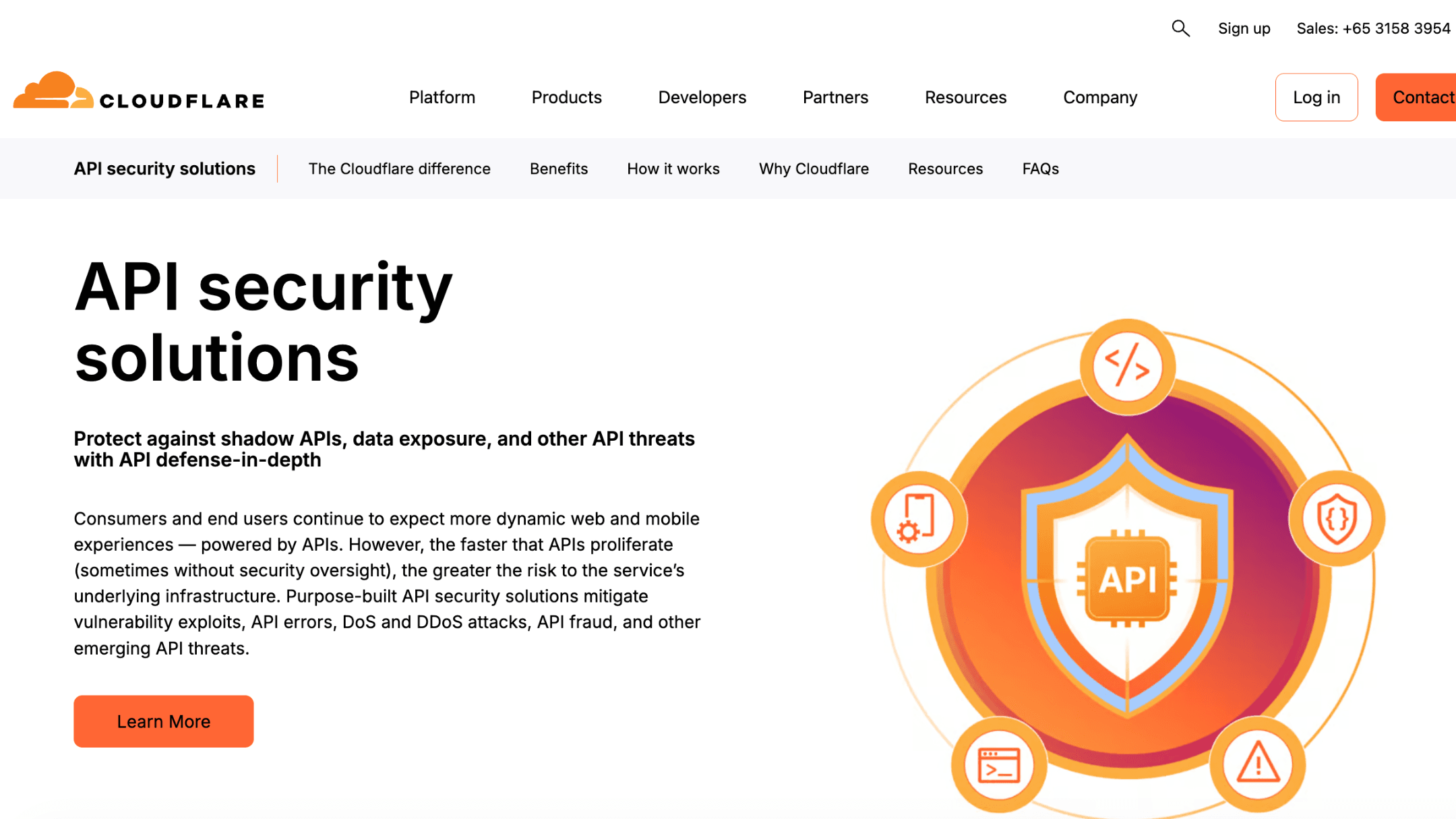
Cloudflare is an international WAAP platform with a content delivery infrastructure network spanning many countries.
Most advanced features, such as behavior based bot protection, unlimited DDoS protection, and round the clock technical support, are only fully unlocked on the enterprise plan, which raises costs significantly as usage scales. The platform also requires an in house technical team to handle configuration, with no managed operations service included on the lower tier plans.
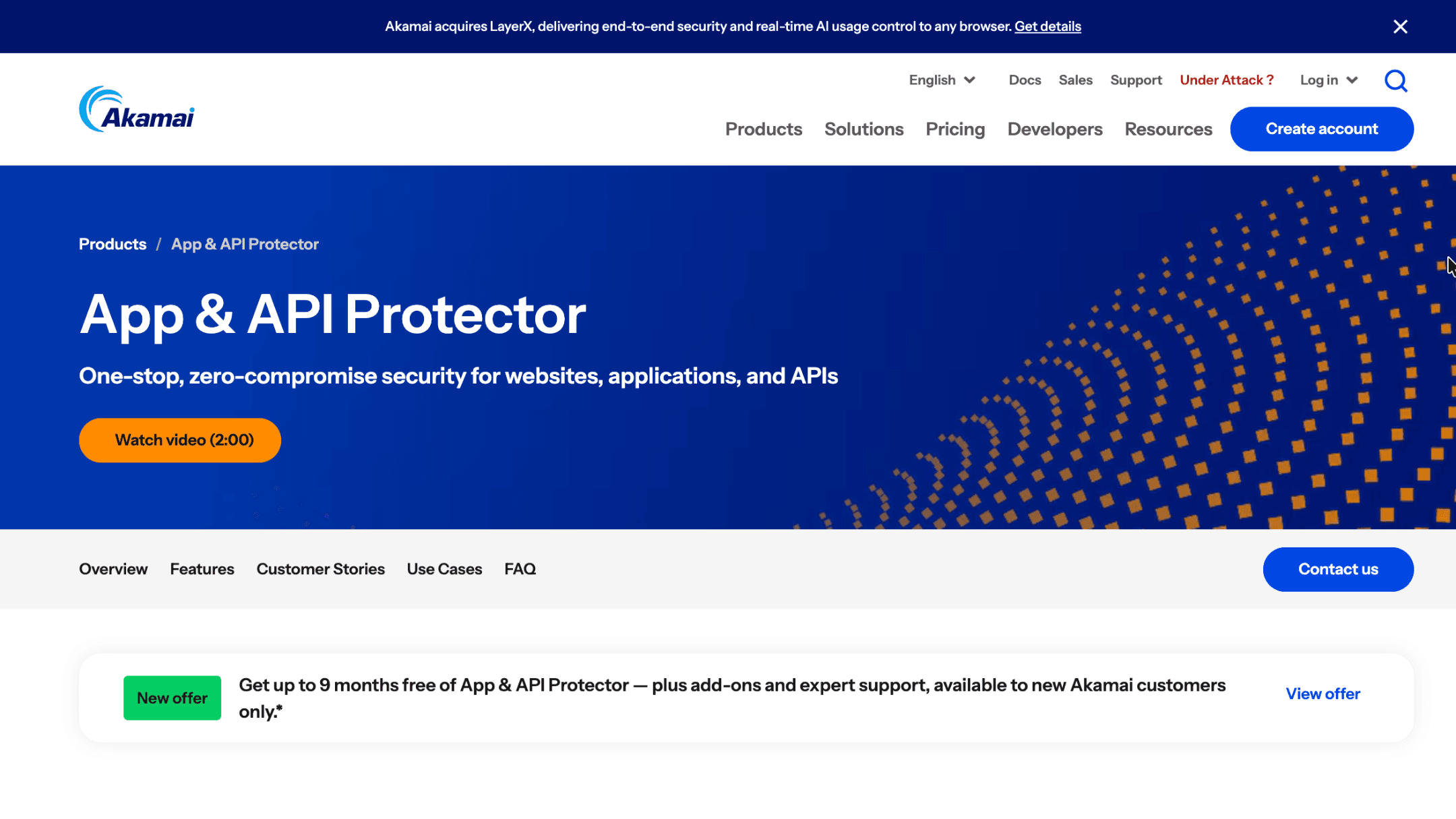
Akamai is one of the longest standing WAF/WAAP platforms on the market, with a large scale global CDN network that is especially well suited to media, streaming, and gaming.
A large security research team keeps the platform continuously updated with new attack rules, but costs are among the highest in the market and the platform requires an experienced technical team to operate effectively.
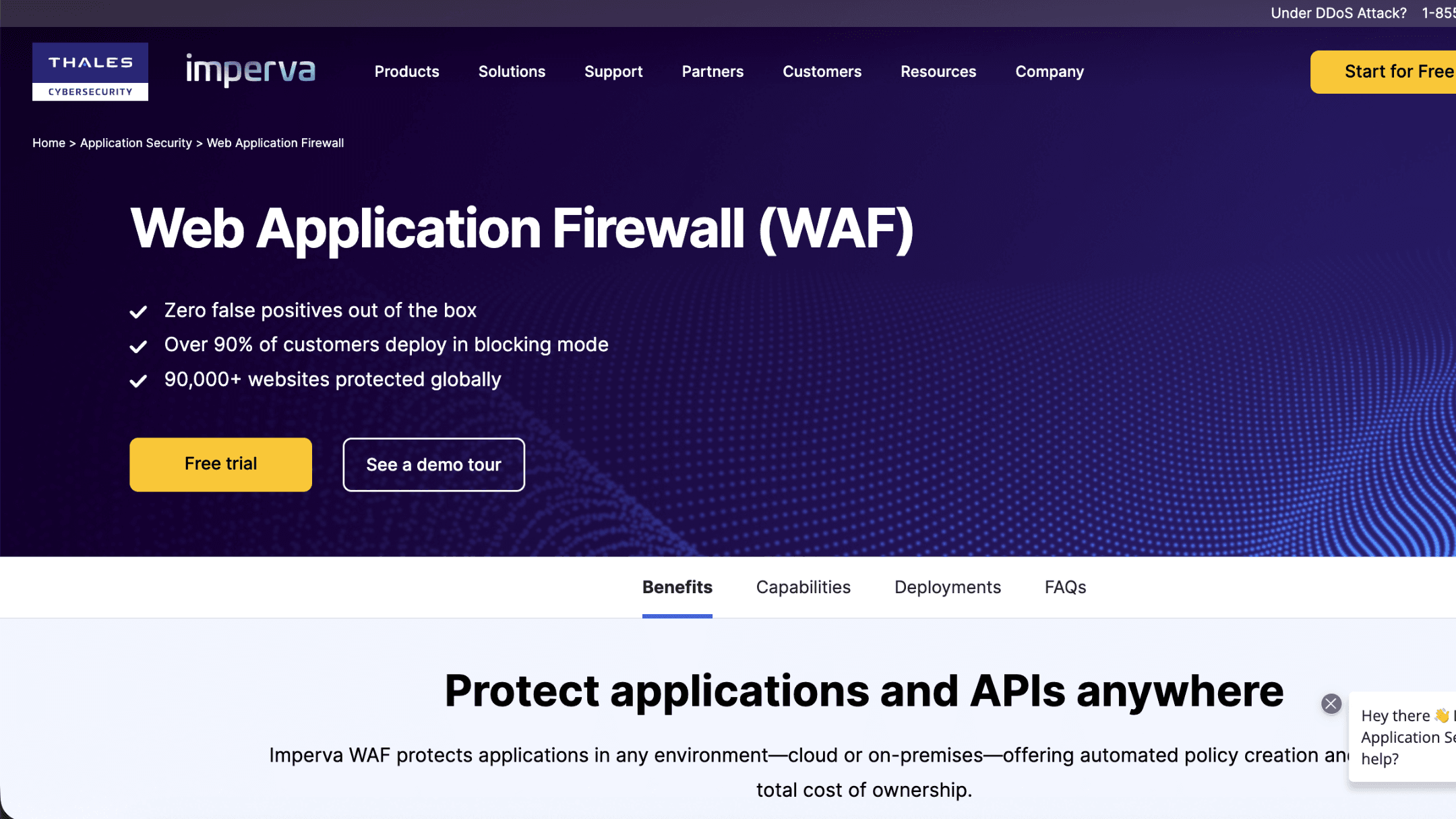
Imperva is one of the few WAAP platforms that fully supports a hybrid deployment model, combining on-premise appliances with cloud services.
The platform suits large enterprises with multiple applications to protect at the same time and an existing in house operations team, since API discovery and managed services are typically separate add-on packages.
F5 is best known for its BIG-IP load balancing product line, with its WAAP solution typically deployed alongside this infrastructure.
Businesses that have already invested in F5 infrastructure gain an advantage when evaluating an additional WAAP layer from the same vendor, but should factor in higher technical support costs compared with cloud native platforms.
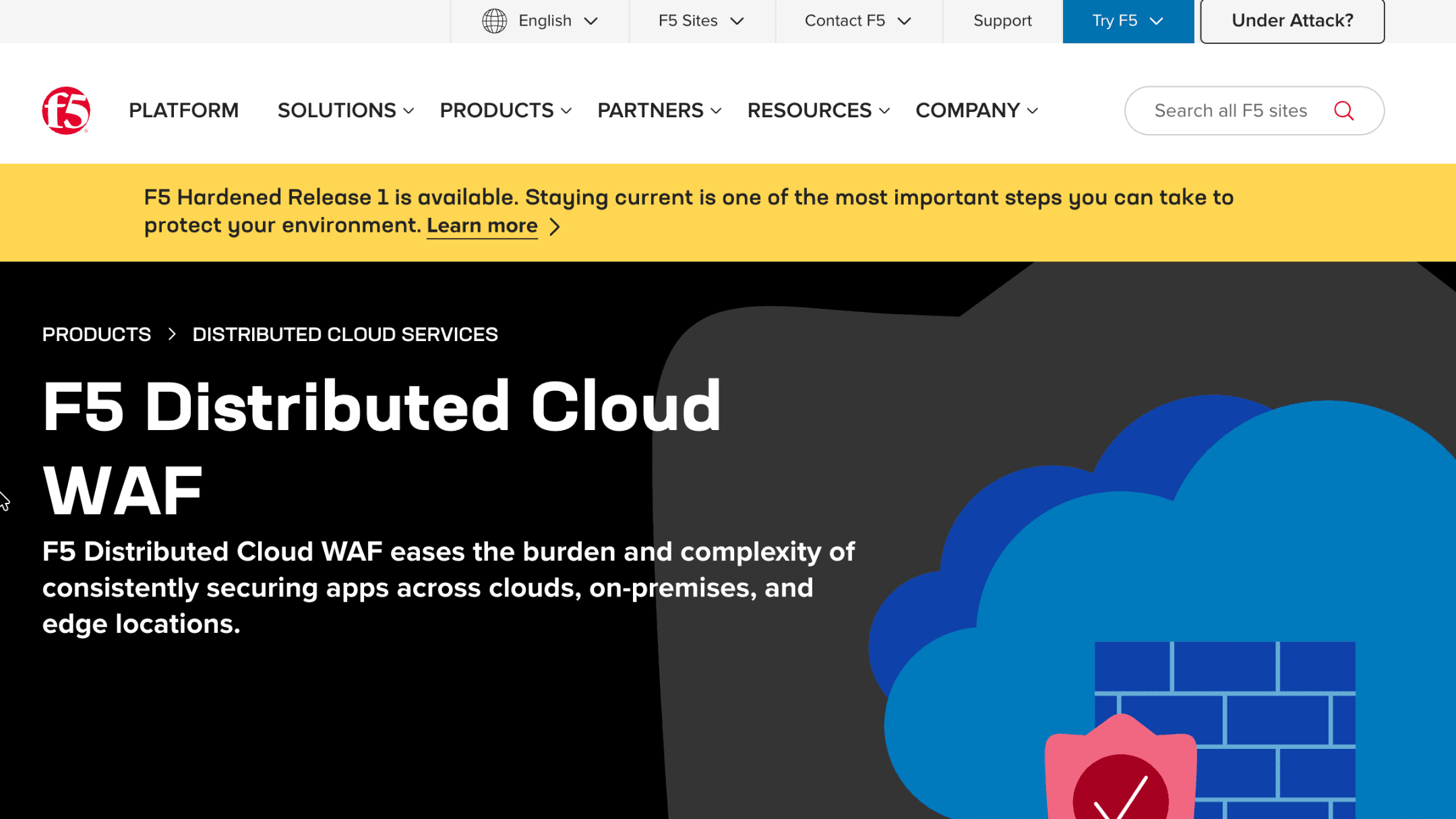
| Criteria | VNIS | Cloudflare | Akamai | Imperva | F5 |
| Deployment model | Cloud | Cloud | Cloud/edge; Prolexic available as a separate on-prem option | Hybrid (cloud + on-premise) | SaaS/cloud-delivered, protecting applications across cloud, on-premise, and edge |
| API protection | Included in the platform | Included in the platform | Included in the platform | Included in the platform | Included in the platform |
| DDoS protection | Multi-layer (Layer 3/4/7), included in the platform | Included in the platform | Included in the platform | Included in the platform | Included in the platform |
| Starting price | Free plan available (WAF Free) | Free plan available | Quote based | Quote based | Quote based |
| Infrastructure | Wide global coverage. Especially strong in Vietnam. | Large scale global edge network. | Large scale global edge network. | Large scale global edge network. | Large scale global edge network. |
| Support team | 24/7 SOC, direct support in Vietnamese, same time zone as Vietnam | Community support on the free plan; priority/24-7 support only on Business plan and above | Standard 24/7/365 support for all customers; managed service and advanced SOC are separate add-ons | Managed service available through a global SOC, usually a separate add-on package | Support through a sales/technical team under contract subscription, no self-service option at the entry level |
No single WAAP solution is the best fit for every situation. A large e-commerce business with sharp seasonal traffic swings has different priorities than a financial institution bound by strict domestic data residency requirements, and both differ from a manufacturing company that only needs to protect a corporate website and an internal portal.
Rather than comparing feature lists side by side, a more practical approach is to start from the business's own operating context and then match that back against the providers listed above. Three factors deserve equal weight in the decision:
In practice, domestic providers such as VNETWORK tend to have the clearest edge exactly where many Vietnamese businesses care most: infrastructure based in Vietnam reduces latency and makes it easier to meet local data residency requirements, backed by a technical support team working Vietnam hours and communicating directly in Vietnamese when issues arise. These are advantages that pure technical features are hard to replace, especially for businesses without a dedicated security team to operate a complex international platform on their own.
Once these three factors are clear, businesses usually narrow the field down to two or three suitable options, rather than having to weigh the entire market. The next step is to request a demo or a hands on trial, since how a WAAP platform handles the specific traffic patterns and threats a business actually faces can only be verified through real operation, not through a feature comparison table.
The WAAP market today has enough options for businesses of every size, from international platforms with strong global infrastructure to domestic providers who understand the local legal and operating context in Vietnam. Rather than chasing the biggest names, businesses should compare their actual needs around traffic scale, budget, and compliance requirements before deciding.
If you are not sure where to start, WAF Free from VNIS is a safe first step: quick to deploy, no upfront cost, and upgradable to more comprehensive protection layers once the business is ready to scale.
WAF Free is a free starting point within the VNIS ecosystem, letting you deploy Web/App/API protection right away, before considering an upgrade to more comprehensive security packages.
Button;Sign up;https://partner.vnetwork.vn/?utm_source=google&utm_medium=blog&utm_campaign=waf_free&utm_term=topgiaiphapwaap;_blank
A WAF focuses on filtering HTTP/HTTPS traffic at the web application layer, while WAAP extends protection to cover the entire API surface, adding multi-layer DDoS protection and bot management within a single unified platform.
Yes. Even a small website or application can become a target for automated vulnerability scanning bots. Small businesses should start with a basic package like WAF Free to build a baseline layer of protection before expanding further.
It depends on the operating model. International platforms suit businesses with global scale and an in depth technical team, while domestic platforms tend to have an advantage in cost, support speed, and the ability to meet local regulatory compliance requirements.
WAF Free provides a basic layer of protection for web applications against common vulnerabilities. For systems with multiple APIs that need deeper protection, businesses should consider upgrading to higher tier VNIS packages that fully integrate API security features.
The migration process typically starts by pointing DNS traffic to the new WAAP platform in log mode for monitoring and testing, before switching fully to block mode. This lets the technical team detect and resolve false positives early, before they affect real users.