.png)
VNETWORK delivers a free digital shield to protect Vietnamese businesses' websites
More than a decade ago, Ms. Phan Thi My Hau, co-founder of VNETWORK, repeatedly watched Vietnamese businesses struggle to withstand cyberattacks: operations disrupted, data leaked, losses running into the tens of billions of dong. The problem at the time was not a shortage of security solutions on the market, but that domestic products had not yet earned enough trust, while international solutions were priced far beyond what most Vietnamese businesses could afford. That gap drove her and her co-founders to establish VNETWORK, placing security at the core and pursuing it steadily for 13 years.
Today, AI stands on both sides of the cybersecurity battle: attack and defense. Recognizing this, our engineering team used the same technology to comprehensively upgrade our security system to international standards in just six months, while also packaging a streamlined, free version for every business. The result brings to life an aspiration held since day one: every Vietnamese business, regardless of size or budget, deserves the right to be protected.
Digital transformation opens two doors: opportunity and risk
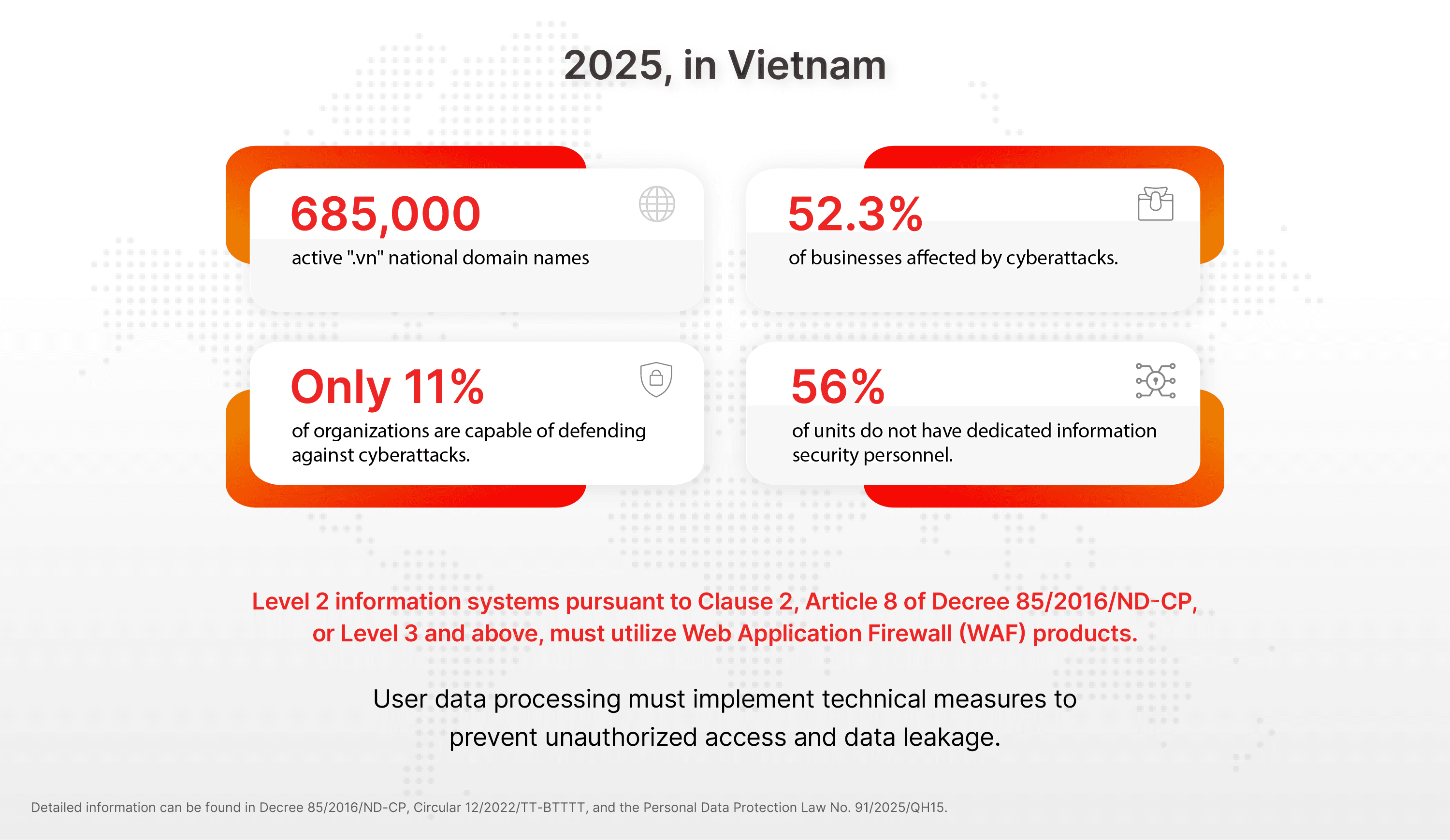
Vietnam is placing great expectations on digital technology. Politburo Resolution 57-NQ/TW identifies science, technology, innovation and digital transformation as the main drivers propelling the country into a new era. A wave of supporting policies has moved businesses and household enterprises onto the digital environment at an unprecedented pace, reflected in figures such as 78.8% of the population using the Internet, an e-commerce market that reached USD 31 billion in 2025, and roughly 685,000 active ".vn" national domains. Digitalization is no longer the privilege of large corporations; it is happening everywhere.
But every new website and application is also “a new door” opening onto cyberspace, while most businesses have “not yet had time to fit a lock” on that door. A domestic cybersecurity survey published in 2025 found that 52.3% of agencies, organizations and businesses had been affected by a cyberattack. Ministry of Public Security statistics recorded losses from cyberattacks during 2020 to 2025 at nearly VND 40,000 billion. In 2025, our systems recorded more than 2.3 million attack events of varying severity. The threat is now a constant presence, no longer a theoretical concern.
More worrying still, AI is lowering both the cost and the difficulty of carrying out an attack. Hackers no longer need to manually probe for vulnerabilities one by one; they hand the work to AI to automatically scan, detect weaknesses and exploit data at scale. Some estimates put the success rate of AI assisted attacks as high as 70%. On the defense side, capabilities have not kept pace: only 11% of organizations in Vietnam are considered capable of countering cyberattacks, and 56% still lack dedicated information security staff.
A market problem still without a solution
The market faces a paradox: the smaller the business, the more vulnerable it is to attack, yet the less budget it has to protect itself. Companies that once believed they were too small to attract hackers' attention are now at the top of the target list, precisely because their defenses are the thinnest. Small and medium enterprises make up 98% of all businesses nationwide and are expected to be the driving force of the digital economy. Yet when it comes to security, they are the most vulnerable point in the entire ecosystem.
Pressure comes not only from hackers but also from the regulatory landscape. Under the Appendix issued with Circular 12/2022/TT-BTTTT (guiding Decree 85/2016/ND-CP), information systems classified at Level 2 (under Clause 2, Article 8 of Decree 85/2016/ND-CP), or Level 3 and above, are required to deploy a web application firewall. Starting in 2026, the Law on Personal Data Protection No. 91/2025/QH15 raises the bar further, requiring every organization that processes user data to apply technical measures to prevent unauthorized access and data leakage. Protecting web applications has shifted from a recommendation to a statutory requirement. Yet even this minimum threshold remains out of reach for hundreds of thousands of small and medium enterprises.
Industry experts have repeatedly spoken out about this situation. At a forum on cybersecurity for small and medium enterprises held by the National Cyber Security Association in mid April 2026, Colonel Nguyen Hong Quan, Deputy Director of the Department of Cyber Security and High Tech Crime Prevention (A05, Ministry of Public Security), warned that a lack of incident response experience and technology personnel is turning SMEs into weak links in the digital ecosystem.
Also at the forum, Mr. Vu Duy Hien, Deputy Secretary General and Chief of Office of the National Cyber Security Association, said that for small scale businesses, a cyberattack incident is not simply a technical failure; it can directly threaten the survival of the brand itself. He noted that rather than general calls to action, the business community today needs more practical solutions.
When strong enough motivation meets a ripe moment
For Ms. Hau, this is the moment to finally solve that problem, as three forces converge at once. First, the spread of digitalization is expanding the attack surface faster than most organizations can raise their security awareness. Second, the threat has escalated significantly now that AI has entered the attacker's side too. Third, our own capabilities, forged over more than a decade, are now mature enough to act.
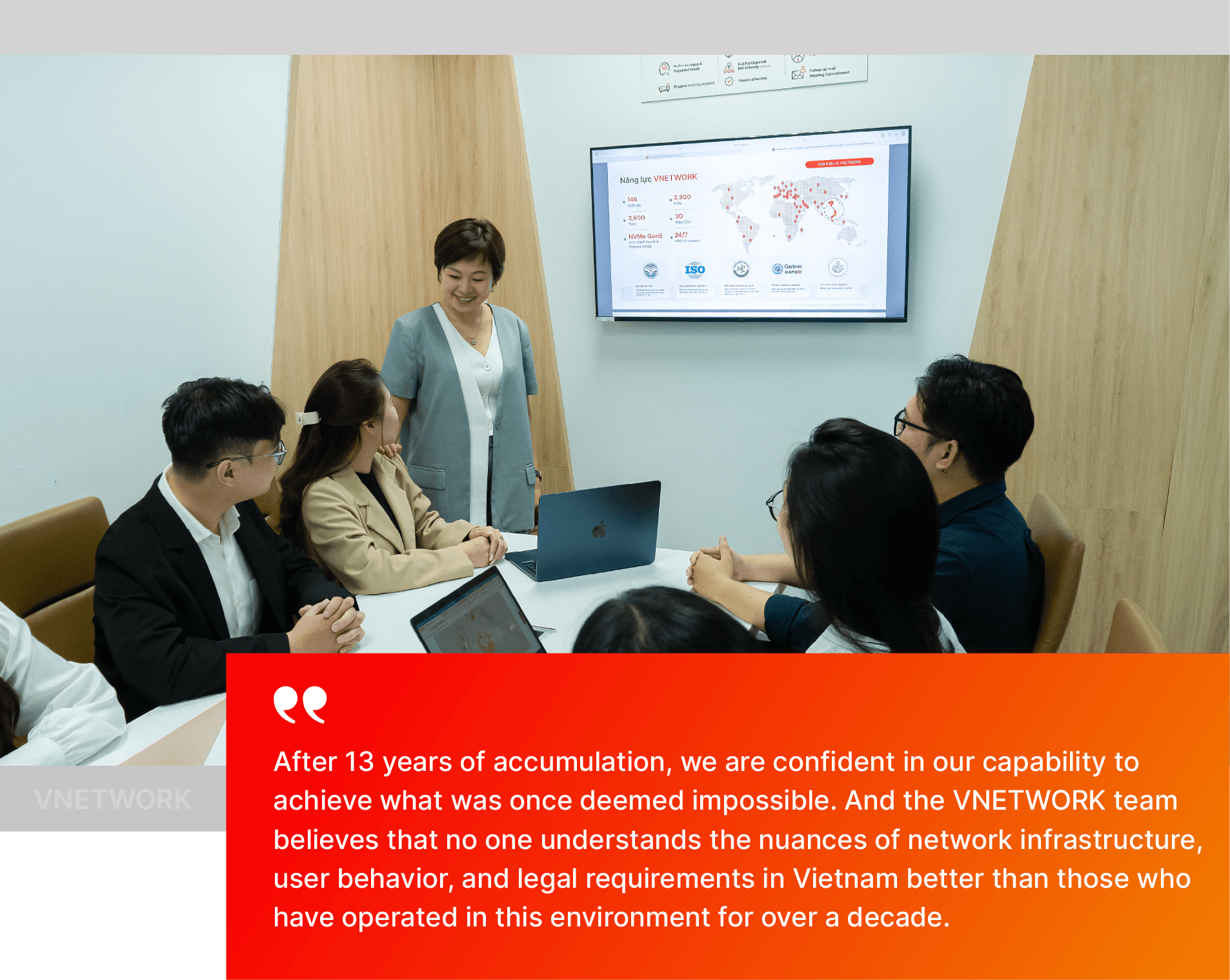
At a time when AI has become a buzzword mentioned everywhere, the question of "who is actually creating value from this technology" is still waiting for a concrete answer. We chose to answer through action: applying AI to our core product, then handing the results to the Vietnamese business community at no cost.
Over 13 years of operating security solutions for thousands of businesses, we accumulated an asset that cannot be bought anywhere: practical understanding of architectural weaknesses that only surface after years of directly fending off attacks, not from theory or a lab. That entire base of experience was poured into a six-month sprint to optimize the whole platform, with AI acting as a partner: models trained on the real-world attack data our systems have collected over the years. This let our Research & Development team shorten the process of building thousands of security rules and turn complex configurations into just a few steps.
The result of those six months is the most powerful WAAP (Web Application & API Protection) version yet of the VNETWORK security platform, along with a WAF (Web Application Firewall) version packaged as a gift to the Vietnamese business community. But for us, no matter how powerful the technology, it is only a launchpad; the final product quality is still decided by engineers who understand the system inside out, people willing to see every line of configuration through to the end.
Delivery and defense on a single platform
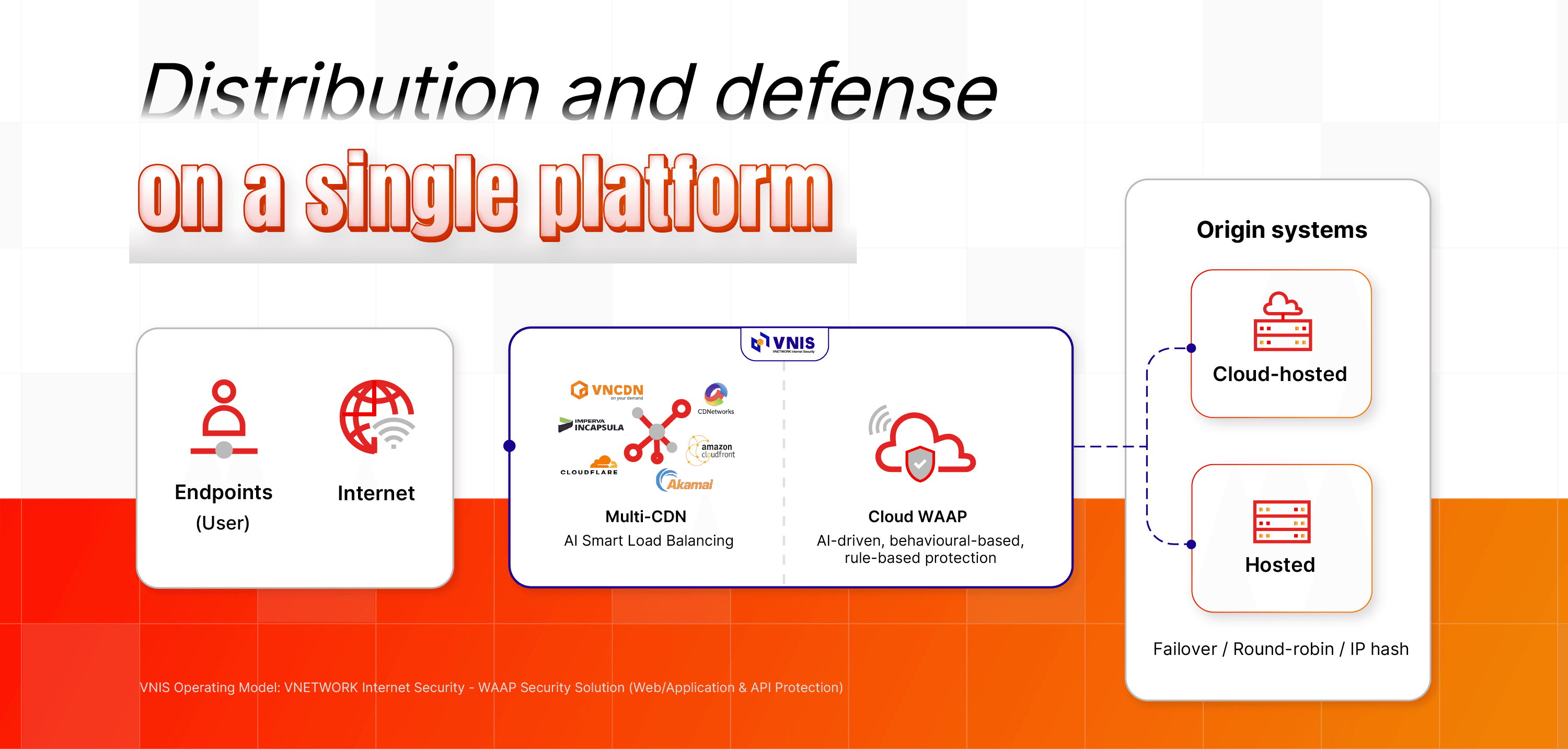
The results of this acceleration phase are most evident in how the platform was built. Most security systems on the market operate as two checkpoints located in different places: traffic has to pass through each checkpoint in turn before reaching the website. Every handoff adds a point of latency and a point of risk. We chose the opposite approach from the architecture stage onward: merging both into a single checkpoint, where content delivery and defense happen simultaneously, with AI embedded in both layers.
At the delivery layer, our infrastructure spans more than 2,300 points of presence across 146 countries, with 2,600 Tbps of bandwidth and over 4,000 dedicated servers in Vietnam. But the most impressive figure is not scale, it is how the system is optimized for the domestic market: Viettel users are served from server clusters sitting right inside Viettel's own infrastructure, VNPT users from VNPT clusters, without traffic having to loop out to servers abroad and back.
At the defense layer, the system works like a checkpoint sitting right in front of the website, examining every visit in an instant. What sets it apart is that this checkpoint does not just match traffic against more than 2,400 built-in rules; it is also AI assisted, reading the context and behavior of each visit and processing it within milliseconds before traffic reaches the server. As a result, the system can block everything from attacks exploiting the most dangerous vulnerabilities on the OWASP Top 10 list, to distributed denial of service (DDoS) attacks at both the network infrastructure layer and directly against the web application (layers 3, 4 and 7 of the OSI model), to API attacks and even previously unknown vulnerabilities. More importantly, the system learns from every attack: the more it encounters, the sharper it becomes at recognizing the sophisticated tactics that traditional rules miss, all while legitimate users continue browsing normally.
VNETWORK launches its first AI-integrated free WAF
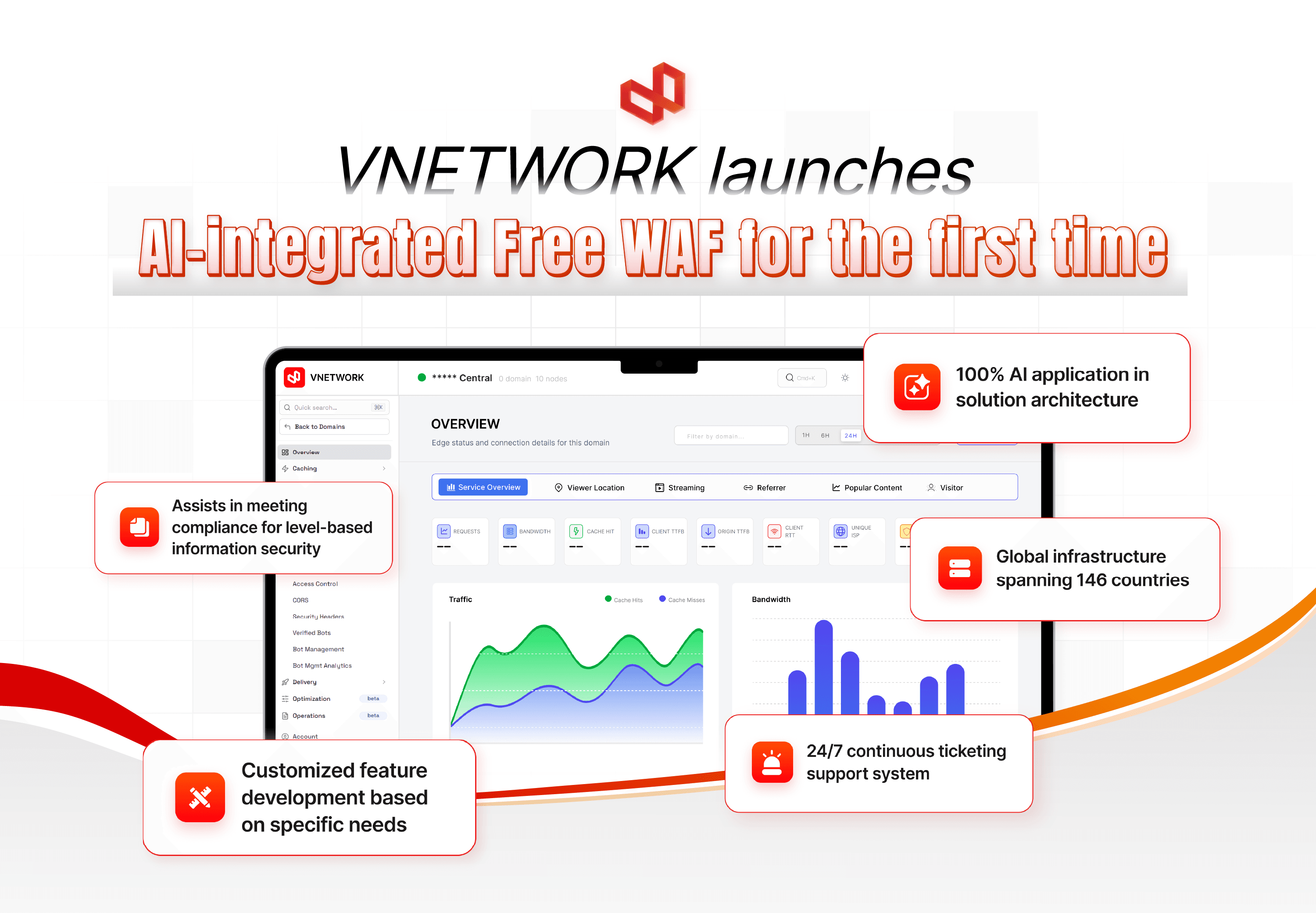
Building on that foundation, VNETWORK is officially launching WAF Free, a completely free web application firewall, requiring no credit card and no need to switch DNS providers. WAF Free is not a stripped-down, lower quality version; it inherits the full infrastructure and core technology of the platform, packaged in its leanest form. The solution lets any business set up a solid protective barrier in about two minutes, at no cost. Businesses do not need to change their existing IT architecture or have a highly specialized IT team.
The free tier includes protection against attacks exploiting vulnerabilities on the OWASP Top 10 list (SQL Injection, XSS, Broken Access Control, and more), DDoS mitigation, a CDN system that speeds up website delivery, and a real-time traffic monitoring dashboard. Businesses can use it for free with no time limit. Upgrading to a paid tier is entirely the user's decision, for when they need to unlock the platform's full capabilities: large-scale DDoS protection, in-depth API protection, advanced rule customization and SLA commitments.
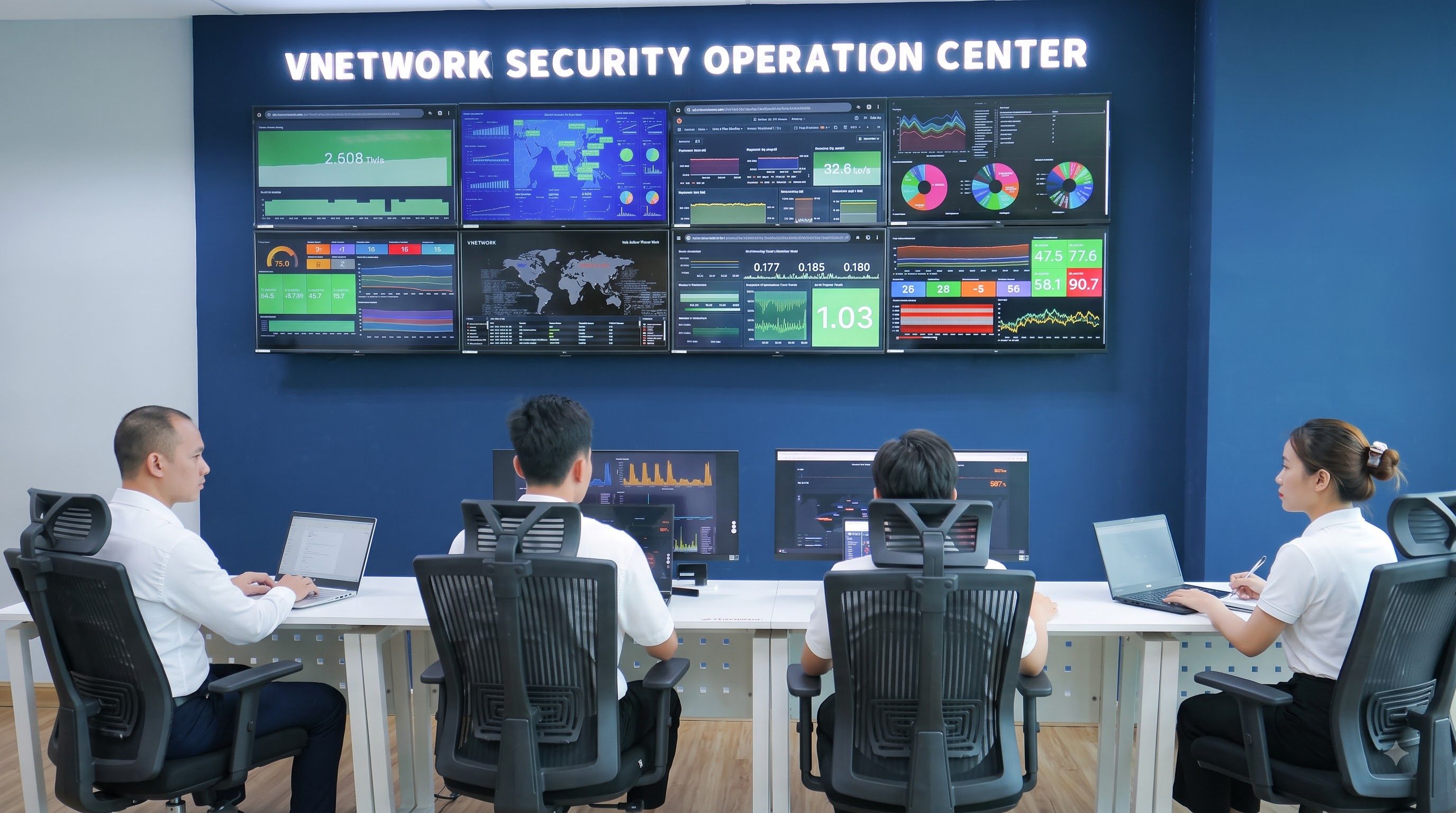
We do not stop at handing over a tool and leaving businesses to operate it on their own. Alongside the solution comes a complete set of technical documentation in Vietnamese, a developer community sharing real-world experience, a continuous support ticketing system, and a team of SOC experts on duty 24/7 who understand the local environment, accompanying businesses from the first setup step through to full, properly configured protection.
"Six months is not a technical miracle. It is what happens when you know exactly who you are building for, what problem you are solving, and you use AI not as a feature to advertise, but as a pillar in every design and execution decision," said Mr. Nguyen Kim Tho, Head of Solutions at VNETWORK.
A long-term move for Vietnam's digital future
For us, the free WAF is not a promotional campaign; it is a long-term strategic move. As the baseline security posture of the majority of businesses rises, the credibility of Vietnam's entire digital economy rises with it in the eyes of users, investors and international partners.
Behind that choice is also a calculation about self-reliance. When an economy's digital shield depends entirely on foreign technology, any geopolitical shift or incident on international fiber-optic cable routes can leave domestic businesses stuck waiting, unable to act. A solution built by Vietnamese engineers and operated on domestic infrastructure keeps Vietnamese businesses' digital assets firmly within Vietnamese control.
The destination we are aiming for also goes beyond detecting attacks: using AI to predict and neutralize threats while they are still emerging, shifting the security model from reactive response to proactive prevention. This approach lets risks be eliminated before they can turn into incidents.
Today, more than 200,000 web applications are protected on our platform, ranging from leading enterprises in their industries to hundreds of businesses whose operational and customer data matter just as much. That community is about to welcome new members: businesses gaining standard-grade protection for the first time, on the very platform that leading organizations already trust, and completely free of charge.
This article was originally published by VTC News. Read the original article here.