The rapid expansion of AI applications, from AI Agents and video AI to real-time voice services, is placing enormous strain on global component supply chains, continuously driving up infrastructure operating costs and eroding supplier margins. Across-the-board price adjustments are an inevitable consequence of a market facing serious supply-demand imbalance.
Gartner forecasts that RAM (DRAM) prices will rise 125% and SSD storage (NAND flash) will surge 234% in 2026, with this pressure unlikely to ease before 2028. In January 2026, AWS raised GPU service prices by 15% across all regions. Analysts project that increases of 5 to 10% will spread across all cloud providers in the second half of 2026. In practice, Alibaba, Baidu, Tencent, and numerous other Asian providers followed suit within a single quarter. Businesses are feeling the direct impact through sudden monthly cloud bill increases, resource shortages, and service disruptions at peak business periods.
In Vietnam, the challenge is even more complex. Data localization is no longer merely a legal requirement but has become a long-term national development priority, compelling businesses to realign their infrastructure strategies as part of their digital transformation journey.
Effective from January 1, 2026, the Personal Data Protection Law No. 91/2025/QH15 officially came into force, accompanied by Decree 356/2025/ND-CP which fully replaces the previous Decree 13/2023 with significantly stricter requirements.
When using international providers, Vietnamese customer data may be stored on servers located in Singapore, Japan, or the United States. This constitutes a "cross-border data transfer." Businesses are obligated to conduct impact assessments, ensure the receiving country has equivalent cloud computing security standards, and report to regulatory authorities. Non-compliance can result in fines of up to 5% of the previous year's revenue, a penalty heavy enough to compel businesses to reconsider their data storage strategies.
From another perspective, Mr. Vo Ly Minh Nhan, CIO of Galaxy Studio, shared: "Businesses that proactively control their data and fully comply with the law will have a clear competitive advantage in the eyes of partners, investors, and customers. This is especially true in fintech, healthcare, and e-commerce, where trust in data security is becoming a selection criterion on par with pricing and features. Compliance costs may appear burdensome on the surface, but they are fundamentally an investment in reputation, the hardest asset to build and the fastest to lose in the digital age."
This content has also been featured on VTV and VietnamNet.
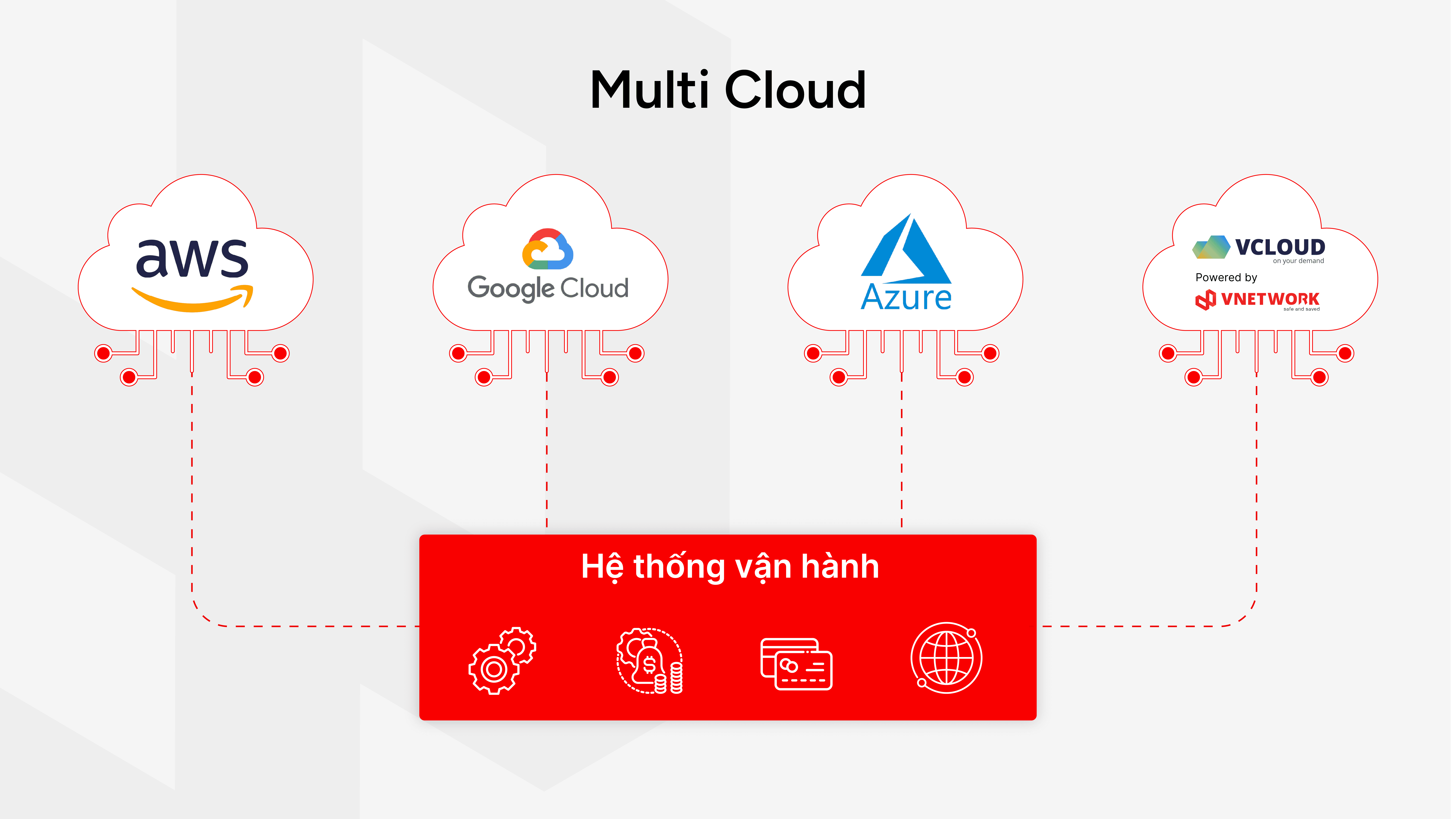
Since the start of 2026, a new trend has been taking shape within the technology community: workload splitting. Businesses retain foreign cloud for specialized ecosystem needs such as AI APIs, machine learning pipelines, and international SaaS services, while gradually migrating sensitive and core data to domestic infrastructure. This is not a purely cost-driven decision but a structural rearchitecting of systems toward greater safety and resilience.
In this context, domestic cloud providers, long regarded as backup options, are being reassessed with fresh seriousness.
Standing out in this wave of repositioning is VCLOUD, the cloud solution from VNETWORK. While most of the market is feeling pressure from global hardware supply chains, VNETWORK has stayed outside that cycle through a domestically self-sufficient infrastructure strategy built early and a philosophy of continuous reinvestment. The company has not only maintained stable pricing for customers but also retained the capacity to continue upgrading infrastructure at the very moment market conditions are most volatile.
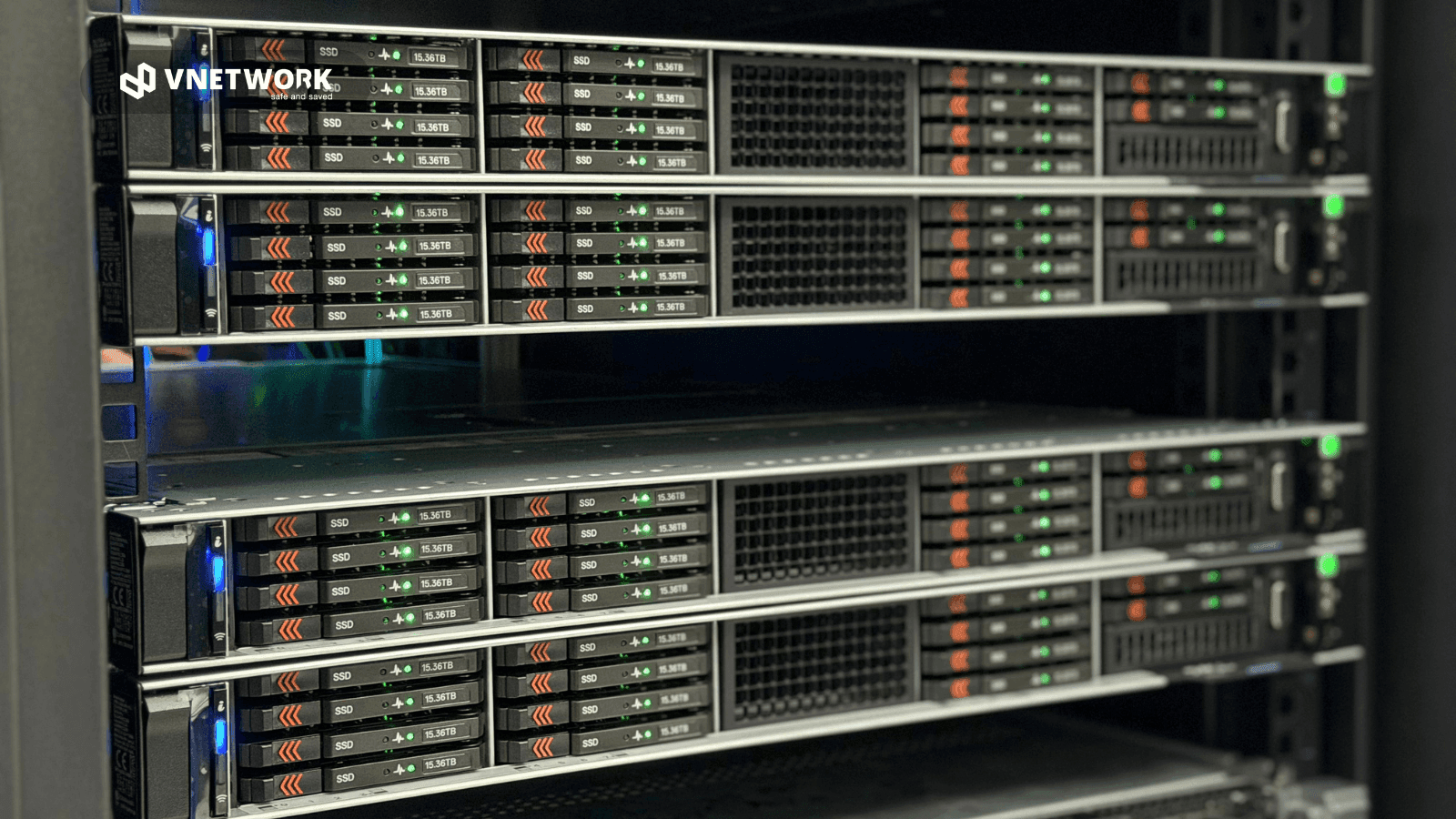
VCLOUD operates on data center infrastructure meeting international Tier III standards, integrating NVMe Gen 5 and next-generation CPUs and GPUs with an SLA uptime of up to 99.997%. The security system holds ISO 27001/20000-1 certification and supports 2FA, SSH Key Pair, Firewall Rules, and granular permission management by team and project. The platform is built for flexible scaling according to business needs, from Kubernetes and Load Balancer to instant backup and snapshots, while fully meeting current Vietnamese legal requirements for data management.
Resolve the dual pressure of rising costs and data security with VCLOUD, the domestic cloud solution with international-grade quality from VNETWORK!
1. Why have international cloud costs risen sharply in 2026?
The global explosion of AI applications has triggered a chain reaction, pushing hardware component prices, including RAM (forecast up 125%) and SSD (forecast up 234%), to record highs. This has prompted major providers to raise service prices by 5% to 15% to offset the rising infrastructure operating costs.
2. What does Personal Data Protection Law No. 91/2025/QH15 require regarding data storage?
Effective January 1, 2026, the new law requires businesses to conduct impact assessments and file reports when transferring data across borders. Storing Vietnamese customer data on foreign servers without meeting equivalent protection standards can result in penalties of up to 5% of the previous year's revenue.
3. How does a multi-cloud strategy benefit businesses in the current landscape?
Businesses are now adopting workload splitting: maintaining international cloud for specialized ecosystems such as AI APIs while gradually migrating sensitive and core data to domestic infrastructure. This approach optimizes costs while ensuring data security and long-term system resilience.
4. What sets VNETWORK's VCLOUD solution apart from the market?
VCLOUD maintains stable pricing through a domestically self-sufficient infrastructure strategy, insulated from the global hardware supply chain price spiral. In addition, the system operates on Tier III internationally certified infrastructure with a committed uptime of up to 99.997%.
5. Does VCLOUD meet international security standards?
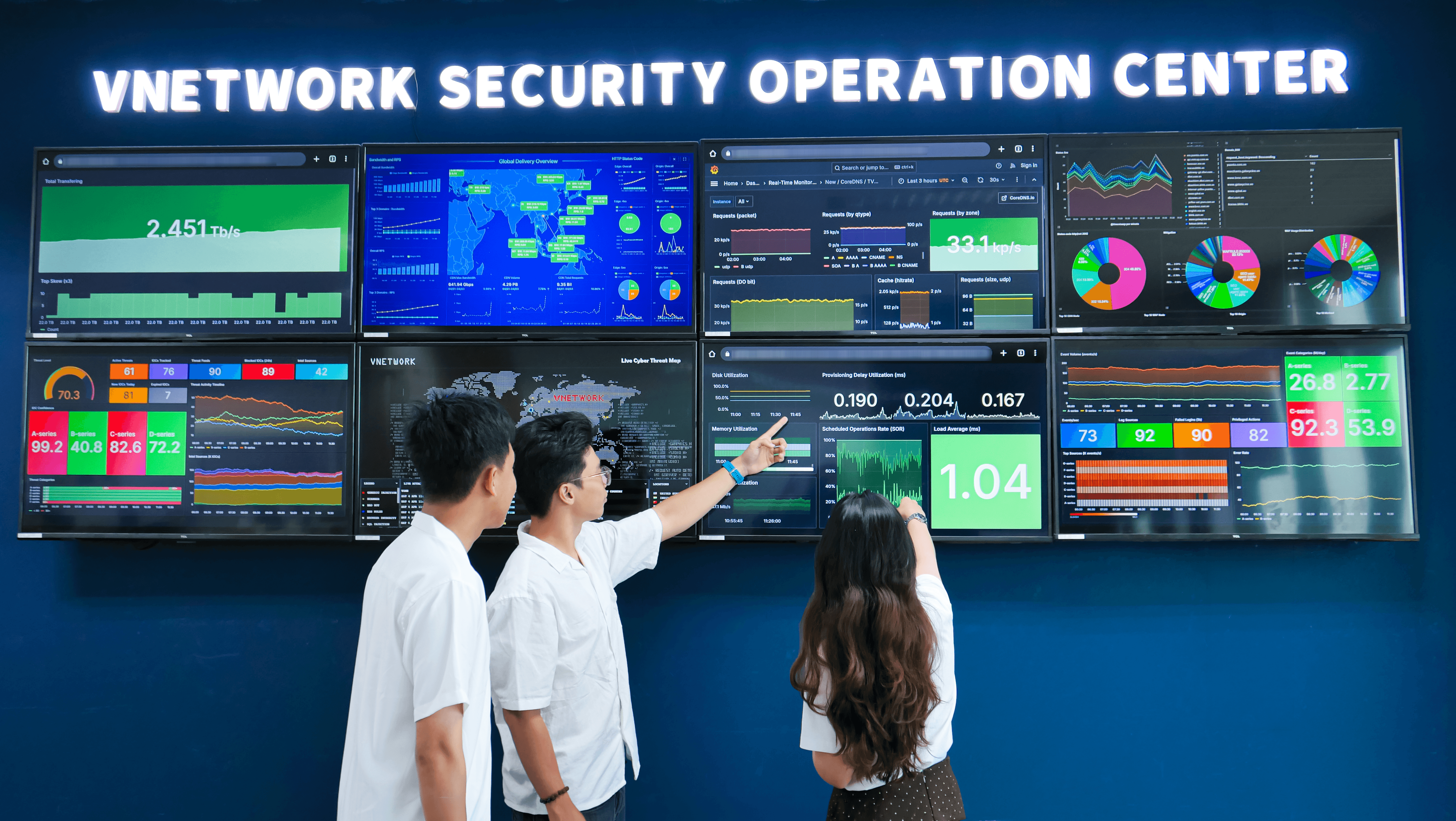
Yes. The VCLOUD platform integrates rigorous security certifications including ISO 27001/20000-1 and supports advanced protection features such as 2FA, Firewall Rules, and a dedicated SOC (Security Operation Center) operations team. This solution enables businesses to fully address the pressure of data security compliance in Vietnam.