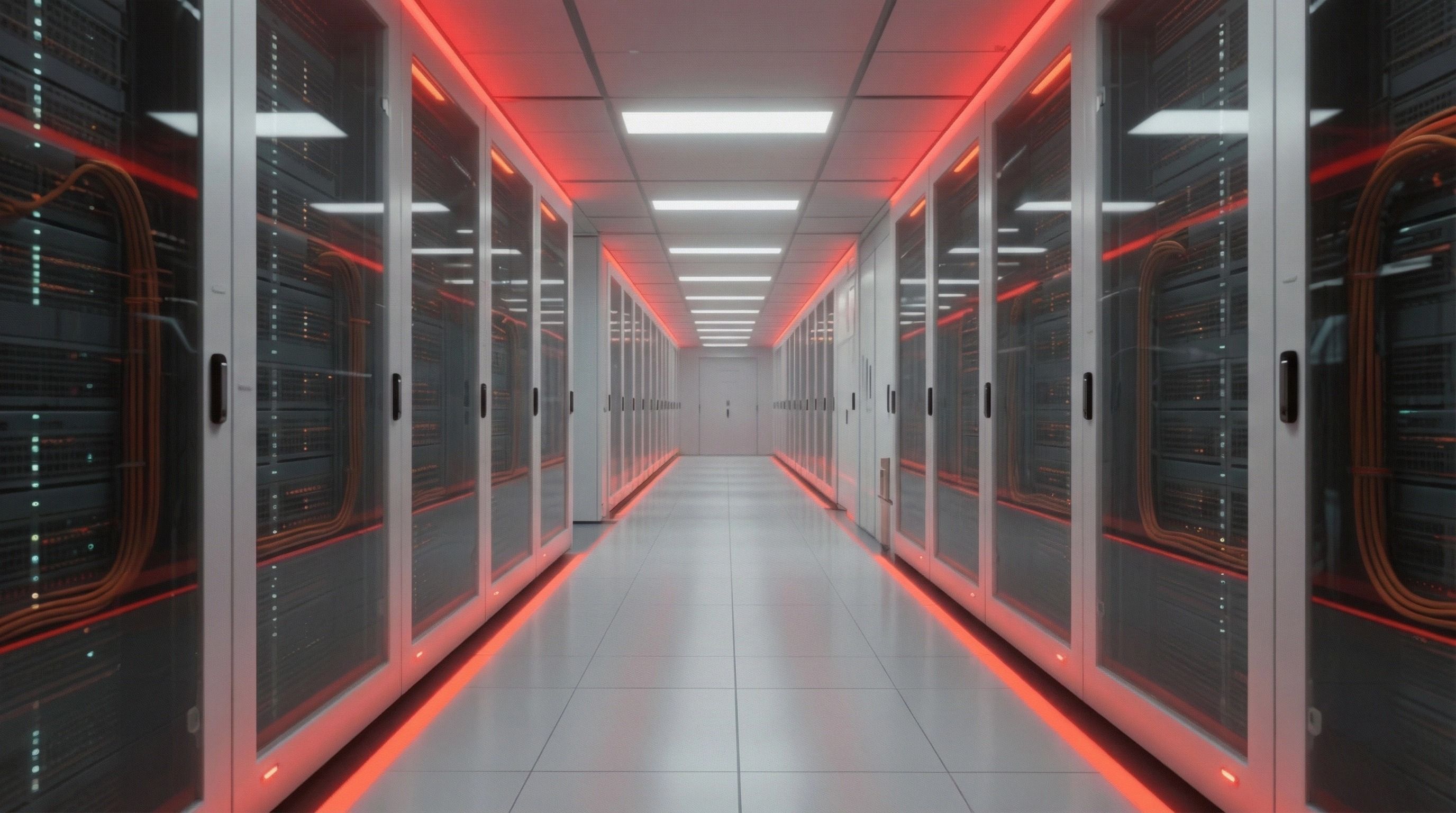
1. What is a Data Center?
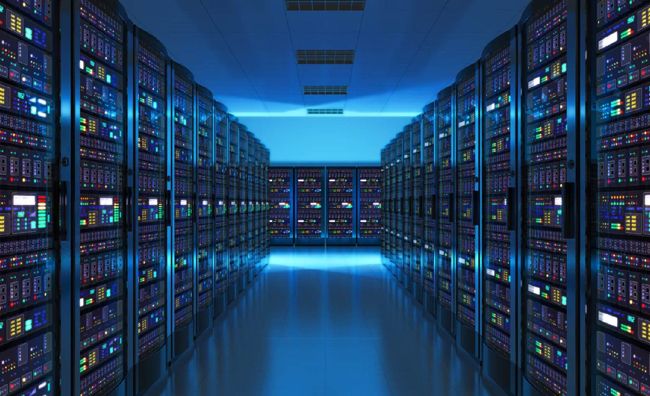
A data center (DC) is a physical facility purpose-built to host, operate, and protect the information technology infrastructure of one or multiple organizations. It centralizes servers, storage systems, networking equipment, and supporting technical infrastructure that enable enterprise digital systems to operate reliably.
In essence, a data center may be a standalone building or a dedicated, tightly controlled area within a larger facility. Inside a data center, hundreds or even thousands of servers run continuously, supported by auxiliary systems such as redundant power supplies, precision cooling, and access control mechanisms. These components work together to ensure IT systems remain stable, secure, and highly available.
2. The history of Data Centers
The history of data centers dates back to the 1940s, closely tied to the emergence of early computing systems. In 1945, ENIAC (Electronic Numerical Integrator and Computer), a supercomputer developed for the US military at the University of Pennsylvania, required a dedicated operational space to accommodate its massive hardware. This marked the foundation of the data center concept.
By the 1990s, the advent of microcomputers significantly reduced hardware size. Servers gradually replaced mainframe systems, and traditional computer rooms officially evolved into data centers, becoming centralized hubs for enterprise IT infrastructure.
In the early 2000s, cloud computing fundamentally transformed the traditional data center model. Organizations could access computing resources over the internet on demand, with flexible pricing models that enabled rapid scaling up or down as business needs changed.
In 2006, Google launched its first hyperscale data center in The Dalles, Oregon, covering approximately 1.3 million square feet and operated by nearly 200 staff. This milestone ushered in the era of massive data centers designed to power global cloud and data services.
According to forecasts by McKinsey & Company, the data center industry is expected to grow at around 10 percent annually through 2030, with global spending on new data center construction potentially reaching 49 billion USD. This projection highlights the increasingly critical role of data centers in the digital economy.
3. How a Data Center operates
At a fundamental level, a data center operates like a complete computing system, but at a far larger scale, with significantly higher performance, stability, and security. All critical enterprise data and applications are processed centrally within a tightly controlled environment.
Basic operational flow of a data center
The operation of a data center can be understood through the following key steps:
- Request intake: Users or systems connect to the data center via the internet or dedicated communication links such as PSTN/ISDN (circuit switched telecommunication networks) or xDSL (digital subscriber line). All access requests are logged and strictly controlled.
- Data processing and storage: Upon receiving a request, servers within the data center process, retrieve, or store data accordingly. Data is segmented into packets to optimize transmission speed and maintain data integrity.
- Data transmission through the network: Routers and switches determine the most efficient routing paths to deliver data from the data center to end users or destination systems, minimizing latency and preventing network congestion.
Security mechanisms during operation
Because data is a critical enterprise asset, data centers are designed with multiple layers of protection:
- Network access control: Firewalls and advanced security solutions are deployed to prevent unauthorized access and mitigate cyberattacks.
- Monitoring and threat detection: Continuous monitoring systems detect abnormal activities early, reducing the risk of service disruption.
Through this multilayered security architecture, data centers protect data throughout its entire processing and transmission lifecycle.
Redundancy and system recovery capabilities
High availability is a defining characteristic of data center operations. To achieve this, data centers are typically equipped with:
- Backup systems: Data backup mechanisms protect against data loss.
- Disaster recovery capabilities: Disaster recovery solutions enable rapid system restoration in the event of technical failures, natural disasters, or security incidents.
These capabilities help enterprises maintain stable operations and minimize downtime.
4. The role and importance of Data Centers
- Foundation of the digital economy and online services: Data centers store, process, and protect data for digital activities such as e-commerce, finance, banking, digital entertainment, and social media. All transactions, access requests, and data analytics are centrally operated within data centers.
- Ensuring business continuity: Modern data centers are designed to operate 24/7/365 with redundant power, cooling, and network systems. This minimizes downtime, ensures high availability, and delivers consistent customer experiences.
- Centralized data security hub: Data centers provide multilayer physical security combined with cybersecurity solutions such as firewalls, IDS/IPS, and DDoS protection, safeguarding critical data against cyber threats and data breaches.
- Enabler of cloud, AI, and digital transformation: Data centers form the core infrastructure for cloud computing, AI, big data, and IoT, enabling enterprises to deploy IaaS, PaaS, and SaaS models and build cloud native applications efficiently.
- Enhanced data backup and recovery: Data centers support fast backup and recovery processes, ensuring business continuity and long-term resilience against operational risks.
5. Components of a Data Center
A modern data center is not only a place where servers are hosted, but also a complex infrastructure ecosystem in which hardware, software, networking, power, environmental systems, and people work closely together to ensure IT systems operate securely, stably, and continuously 24/7.
At its core, a data center is built on three fundamental pillars: computing, storage, and networking, combined with supporting infrastructure systems and a professional operations team.
Servers
Servers are the central component of a data center, responsible for handling the entire IT workload of an enterprise. Unlike personal computers, servers are engineered for continuous 24/7 operation, high reliability, heavy workloads, and seamless scalability.
Within a data center, servers perform critical roles such as running websites, enterprise applications, and digital platforms. They also process transactions, execute computations, and perform real time data analytics, forming the foundation for virtualization and cloud computing.
Depending on usage requirements, a data center may deploy multiple server form factors:
- Rack mount servers: Installed in standard racks, optimized for space efficiency and ease of management.
- Blade servers: High density systems that reduce power consumption and support rapid scaling.
- Mainframe: Ultra high performance computing platforms commonly used by financial institutions and banks with extremely high transaction volumes.
In addition, modern data centers often leverage specialized processors based on workload characteristics. For example, artificial intelligence and machine learning workloads typically require GPUs or dedicated accelerators rather than relying solely on traditional CPUs.
Storage systems
Storage systems consolidate all digital data of an enterprise, including operational data, customer information, sensitive records, and backup data. As data volumes continue to grow, data centers require storage solutions that offer high capacity, fast access, and strong security.
In practice, a data center usually combines multiple storage models:
- DAS (Direct Attached Storage): Suitable for frequently accessed data with low latency requirements.
- NAS (Network Attached Storage): Enables multiple systems to access shared data over Ethernet networks.
- SAN (Storage Area Network): High speed centralized storage architectures typically used for mission critical applications.
Data center storage systems commonly integrate RAID (Redundant Array of Independent Disks) to enhance data protection, along with backup and restore mechanisms to prevent data loss during incidents. Storage management software is also deployed to optimize performance and enable capacity expansion when needed. Together, these capabilities allow data centers to meet large scale storage demands while ensuring data availability for business operations.
Networking systems
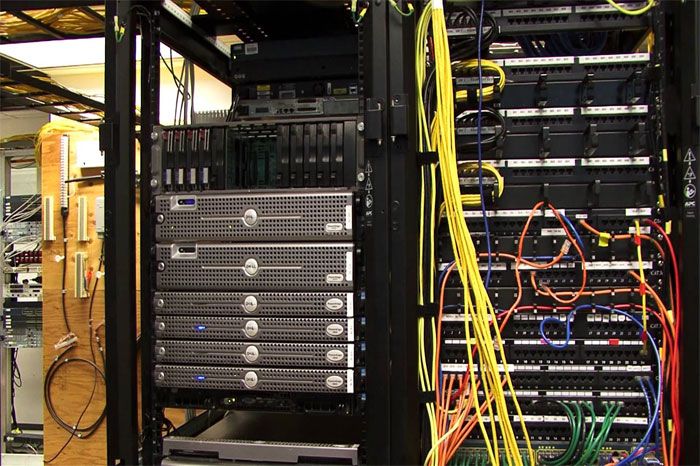
The network serves as the connective layer between servers, storage systems, and end users. It is a key determinant of how fast, stable, and secure data access can be.
Within a data center, the network is designed to handle two primary traffic patterns:
- East - West traffic: Traffic exchanged between servers and storage systems inside the data center.
- North - South traffic: Traffic flowing between the data center and external users or systems.
Key networking components include:
- Switches: Connect servers and storage within the internal network with high bandwidth.
- Routers: Connect the data center to the internet and external networks.
- Firewalls: Control access and protect systems from network threats.
- Load balancers: Distribute traffic evenly across multiple servers to prevent overload and maintain performance.
Many modern data centers adopt SDN (Software Defined Networking), enabling more flexible network management, easier scalability, and better alignment with cloud and hybrid cloud architectures.
Power systems and energy management
Power is a mission critical element of any data center. A reliable power system ensures high availability and minimizes the risk of service disruption. Even a brief power outage can cause serious business impact, which is why data centers are designed with multiple layers of redundancy:
- UPS (Uninterruptible Power Supply): Provides immediate backup power when the primary supply fails.
- Backup generators: Ensure continuous power delivery during extended outages.
- PDU (Power Distribution Unit): Distributes stable power to individual servers and devices.
Cooling systems and environmental control
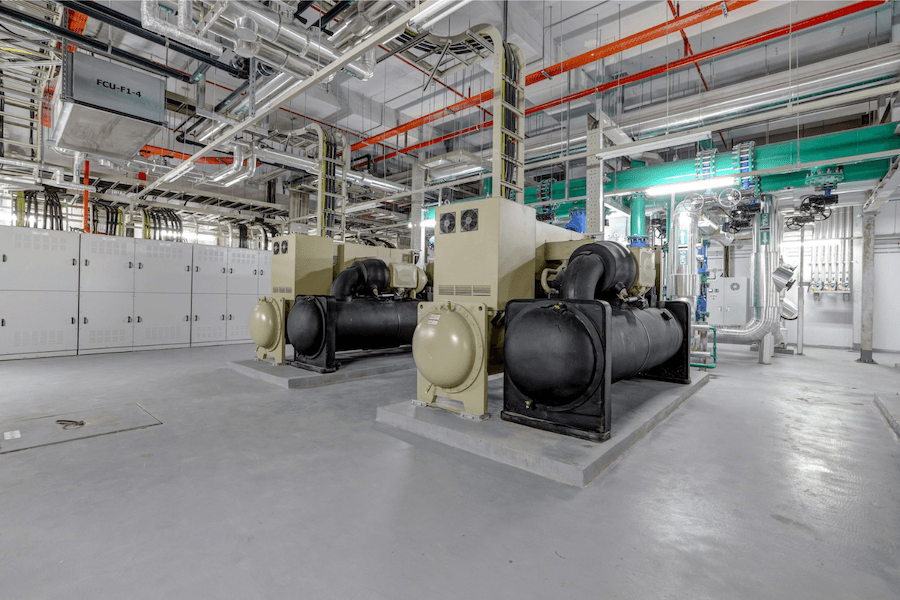
Servers and networking equipment generate significant heat during continuous operation. Without proper environmental control, inappropriate temperature and humidity levels can reduce equipment lifespan or cause critical failures. Data centers deploy CRAC (Computer Room Air Conditioning), hot aisle and cold aisle designs, and monitoring sensors for temperature, humidity, and static electricity. These systems maintain a stable operating environment, ensuring both performance and long term durability of IT infrastructure.
Physical security and fire protection systems
Beyond cybersecurity, physical security is an essential protection layer of a data center. Facilities typically implement multiple security controls from the perimeter inward, including fencing, security personnel, and surveillance cameras, as well as access control using key cards and biometric authentication. Individual areas and even specific racks are continuously monitored.
For fire protection, data centers use early smoke detection systems and clean agent fire suppression solutions such as FM 200 or Novec 1230, which extinguish fires without damaging sensitive equipment.
Data center operations and management teams
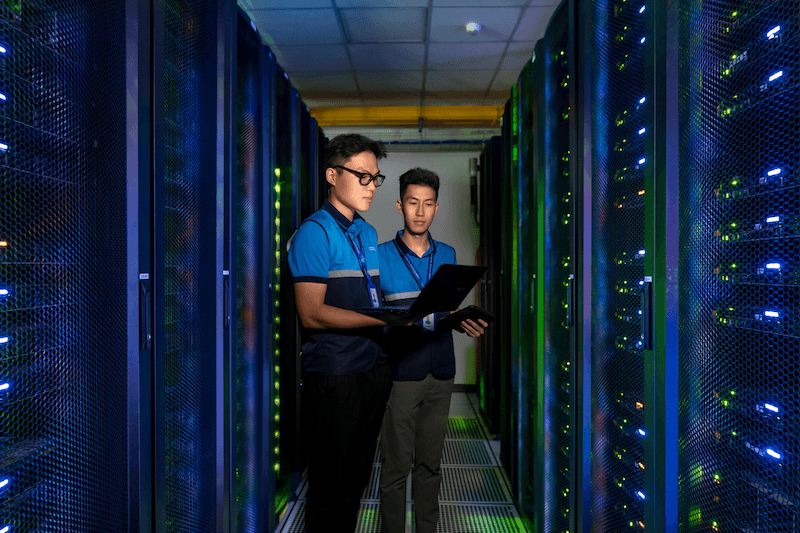
Finally, the operations team determines the real world effectiveness of a data center. System engineers, network specialists, and information security professionals work around the clock at the NOC (Network Operations Center) to monitor systems in real time, detect and resolve incidents quickly, perform maintenance, optimize performance, and ensure stable operations. Thanks to this team, a data center is not merely static infrastructure, but a dynamic operational platform that continuously adapts to the evolving needs of the business.
6. Types of Data Centers
Depending on the level of infrastructure control, security requirements, investment budget, and IT strategy, enterprises can choose from various data center models. In practice, many organizations combine multiple data center types to balance cost, performance, and scalability. Below are the most common data center types today.
Enterprise or on premises data centers
Enterprise data centers represent the traditional model in which an organization builds, owns, and operates its own data center, typically located at headquarters or within internal facilities.
Under this model, the enterprise has full control over all aspects of its IT infrastructure, including site location, architectural design, hardware and software systems, operational processes, and data security policies.
The primary advantage of enterprise data centers is absolute control and high security. Data is stored and processed entirely within internal infrastructure, making it easier to meet strict regulatory compliance requirements such as GDPR or HIPAA, particularly in industries like finance, banking, and government.
However, this model requires substantial upfront capital expenditure for facility construction and equipment procurement. Ongoing operational expenses for power, cooling, maintenance, and specialized IT staff are also significant. Scaling the infrastructure often requires considerable time and investment.
Best suited for: Large enterprises, banks, financial institutions, government agencies, or organizations with extremely high security and data sovereignty requirements.
Colocation Data Centers
Colocation data centers represent an intermediate model between enterprise data centers and cloud services. Instead of building their own facilities, enterprises lease physical space such as racks, cages, or entire rooms within a professionally operated data center.
The provider is responsible for physical infrastructure, including the building, redundant power, cooling systems, physical security, and network connectivity. The enterprise retains ownership and management of its servers, storage, and networking equipment.
This model significantly reduces initial capital investment while allowing organizations to benefit from Tier III or Tier IV grade infrastructure with high reliability. However, enterprises still need to invest in hardware, and resolving physical issues often requires on site intervention.
Best suited for: Medium and large enterprises that need stable, professional infrastructure, want to retain control over hardware, and are not yet ready to fully migrate to the cloud.
Managed Data Center
In a managed data center model, enterprises lease the entire IT infrastructure including servers, storage, and networking, and delegate day to day operations to a service provider.
The provider is responsible for system management, 24/7 monitoring, incident response, and meeting SLA (Service Level Agreement) commitments. Enterprises can operate reliable systems without maintaining a large in-house IT team.
The trade off is reduced technical control and increased dependence on the provider’s service quality.
Best suited for: Small and medium sized enterprises (SMEs), organizations with limited IT expertise, or those requiring remote backup and DR (Disaster Recovery) capabilities.
Cloud Data Center
Cloud data centers are large scale facilities operated by cloud service providers such as Amazon Web Services (AWS), Microsoft Azure, Google Cloud, IBM Cloud, VNPT, or Viettel Cloud.
Instead of renting physical space, enterprises consume virtualized resources including virtual machines, storage, databases, and advanced services such as AI, big data and machine learning.
Key advantages include zero upfront capital expenditure, near instant scalability, and pay as you go pricing models that optimize costs. However, enterprises have less control over physical infrastructure and must actively manage resource usage to avoid unexpected expenses.
Best suited for: Startups and medium to large enterprises undergoing digital transformation, rapid product development, or global expansion.
Hyperscale Data Center
Hyperscale data centers are an extension of cloud data centers, spanning hundreds of thousands to millions of square meters and hosting tens of thousands of servers with highly complex interconnect architectures. These facilities are typically operated by global technology companies and serve as the foundation for large scale cloud, AI, and digital platforms. Their defining characteristics include near unlimited scalability, support for millions of concurrent users, and optimization for massive, continuous workloads.
Edge Data Center
Edge data centers are smaller scale facilities deployed closer to end users than traditional cloud data centers, with the goal of reducing latency and accelerating real time data processing.
They form the foundation of edge computing and are particularly well suited for applications such as AI, machine learning, big data analytics, and CDN (Content Delivery Network).
Best suited for: Systems requiring near instant response, including IoT, real time AI, large scale streaming, and high volume e-commerce platforms.
7. International Tier classification levels for Data Centers
| Tier level | Design description | Redundancy and maintenance capability | Average uptime | Maximum downtime per year | Suitable for |
| Tier I (Basic) | Single power and cooling path with no redundancy | No redundancy. Systems must be shut down during incidents or maintenance | ~99.671% | ~28.8 hours | Very small businesses, internal server rooms, systems that do not require continuous operation |
| Tier II (Redundant components) | Single distribution path with N+1 redundancy for critical components | Can tolerate a single component failure but still requires shutdown for path maintenance | ~99.741% | ~22 hours | Small and medium sized enterprises that accept short planned outages |
| Tier III (Concurrently maintainable) | Multiple independent power and cooling paths | Supports concurrent maintainability without service interruption | ~99.982% | ~1.6 hours | Large enterprises, cloud, hosting, colocation, e commerce, financial services |
| Tier IV (Fault tolerant) | Fully fault tolerant systems with physically isolated paths | 2N or 2N+1 redundancy with automatic failover and no downtime | ~99.995% | ~26.3 minutes | Core banking, securities trading, global payment systems, national critical infrastructure |
International Tier classification levels for Data Centers
8. Essential data center certifications
Selecting a standards compliant data center should not be based solely on scale or cost. It requires evaluation against internationally recognized certifications that reflect technical capability, operational safety and reliability. Data center certifications act as independent benchmarks that enable enterprises to objectively assess data center quality.
Data center technical certifications
Among the most widely recognized technical certifications, ANSI/TIA 942 B and certifications issued by the Uptime Institute are considered global benchmarks. These standards focus on evaluating the overall design and architecture of a data center to ensure continuous operation, strong resilience and long term scalability.
Key evaluation criteria include:
- Network architecture: Ensures stable connectivity, high bandwidth, and minimal network congestion.
- Power system design: Assesses primary power sources, UPS (Uninterruptible Power Supply), and the ability to deliver continuous power across the facility.
- Mechanical systems: Covers cooling, precision air conditioning, and environmental control to protect IT equipment.
- Power, mechanical and telecommunications redundancy: Minimizes single point of failure, a common cause of downtime.
- Fire detection and suppression systems: Uses early detection technologies and fire suppression methods that do not damage equipment.
- Physical security: Access control, surveillance systems, and strict operational procedures.
- Operational efficiency: Optimizes energy usage, operating costs, and long term scalability.
Tier classification
Based on these technical criteria, both ANSI/TIA 942 B and the Uptime Institute classify data centers into four Tier levels that reflect operational stability and availability.
- Tier 1: Basic infrastructure with little to no redundancy. Suitable for small and non critical systems.
- Tier 2: Partial redundancy, but maintenance activities still require system shutdown.
- Tier 3: Fully redundant infrastructure that supports maintenance without service disruption.
- Tier 4: The highest level, offering comprehensive redundancy and fault tolerance, ensuring continuous operation even during major incidents.
In practice, Tier 1 and Tier 2 are typically suitable only for external data storage and are not appropriate for systems that require real time access. Tier 3 and Tier 4, by contrast, are the preferred choice for enterprises operating cloud platforms, financial systems, e-commerce, AI workloads, and other mission critical digital services.
Security certifications
When enterprises outsource data center services or adopt cloud solutions, data security becomes a top priority. In this context, information security and data management certifications are especially critical.
- PCI DSS (Payment Card Industry Data Security Standard): Applies to systems that process, transmit, or store payment card data. A PCI DSS certified data center ensures strong protection of financial information and reduces the risk of data breaches or fraud.
- ISO 27001 (part of the ISO 27000 family): Focuses on establishing an ISMS (Information Security Management System) covering customer data, personnel information, financial records, and third party data. This certification is effectively mandatory for data centers serving large enterprises and international organizations.
Quality management certifications
Beyond technical and security considerations, service quality is also a key factor when evaluating a data center.
ISO 9001 (Quality Management System): Reflects the level of standardization in operational processes, including incident management, customer support, and continuous service improvement. ISO 9001 demonstrates that a data center operates with clear, transparent, and customer centric processes supported by robust infrastructure.
9. Green and sustainable data center trends
Green data centers are becoming an inevitable direction within enterprise ESG strategies, as data centers consume large amounts of electricity and place increasing pressure on carbon emissions. With the rapid growth of AI, big data, and cloud computing, organizations are prioritizing data center models that optimize energy efficiency, improve operational effectiveness, and reduce environmental impact. This approach helps meet regulatory requirements, investor expectations, and long term sustainability goals.
Green data centers are designed with high efficiency cooling systems, energy efficient hardware, virtualization, and modern cloud architectures. They also integrate renewable energy sources such as solar and wind power to reduce waste and operating costs. At the same time, international certifications such as LEED, Energy Star, and The Green Grid are used to assess sustainability performance, strengthen brand credibility, and prepare enterprises for the digital transformation era.
VNETWORK infrastructure deployment at Tier III data centers of leading ISPs in Vietnam
VNETWORK is a trusted partner of leading Tier III data centers in Vietnam, including Viettel, VNPT, FPT Telecom, Mobifone, and CMC Telecom.
Enterprises choose VNETWORK because:
- There is no need to work directly with multiple data center providers
- All procedures, contracts, and technical deployments are handled end to end by VNETWORK
- Systems can be brought into production quickly on internationally certified infrastructure
Tier III data centers where VNETWORK deploys infrastructure:
- Viettel data center: Certified to TIA 942 Rated 3, high data transmission speeds, and 24/7 technical support. Compliant with ISO 9001:2008 and ISO 27001:2013, ensuring stability and information security.
- VNPT data center: Tier III certified, robust connectivity, and continuous technical support. Security systems certified to ISO 27001:2013.
- FPT Telecom data center: Tier III compliant with high reliability. Certified to ISO 50001:2011 and ISO 27001:2013, optimizing efficiency and security.
- Mobifone data center: Tier III certified with backbone network coverage across all 63 provinces. Security systems certified to ISO 27001 and PCI DSS.
- CMC Telecom data center: Tier III and TIA 942 certified, with peering connections to domestic and international ISPs. Compliant with ISO 9001 and ISO 27001, with 24/7 system monitoring.
Bare Metal Server - Server with high performance and rapid deployment
VNETWORK Bare Metal Server delivers dedicated physical servers with no resource sharing, deployed directly at Tier III data centers. Enterprises can go live within just 24 hours, significantly reducing system deployment time. The infrastructure uses next generation AMD/Intel CPUs combined with high speed SSD/NVMe storage, ensuring strong performance and low latency. This solution is well suited for large databases, AI, big data, game servers, and systems that require full infrastructure control.
VCLOUD - Flexible cloud solution by VNETWORK
Cloud computing has become an essential choice for modern enterprises. According to IBM research, approximately 90 percent of e commerce businesses have adopted cloud computing to optimize costs, improve performance, and enhance customer experience. Cloud enables flexible resource scaling, rapid adaptation to growth, and readiness for future digital platforms.
VCLOUD is VNETWORK’s public cloud and private cloud solution, deployed on Tier III data center infrastructure both domestically and internationally. With 12 years of experience, VNETWORK helps enterprises build and operate stable, secure, and cost optimized cloud systems.
Key advantages of VNETWORK Cloud:
- Uptime of 99.997 percent, ensuring continuous system operation
- SSD and NVMe storage with outstanding performance, delivering 53,000 plus IOPS for read and 17,900 plus IOPS for write
- Next generation CPUs with KVM and VMware virtualization to optimize resource utilization
- High speed 10Gbps networking with unlimited bandwidth
- Global infrastructure presence in Vietnam and more than 23 international regions, hosted at Tier III and Tier IV data centers
- Compliance with ISO 27001 and ISO 20000 1 standards
- Expert teams providing 24/7 technical support
Cloud based solution ecosystem on Tier III certified infrastructure
Built on certified cloud and data center infrastructure, VNETWORK develops a cloud based solution ecosystem that enhances security and optimizes user experience. VNIS protects websites, systems, and applications against DDoS and advanced cyberattacks. VNCDN accelerates content delivery, reduces latency, and improves global user experience. EG-Platform is an AI and ML powered email security platform that detects phishing, malware, and email based threats at an early stage. All solutions operate on Tier III cloud infrastructure, ensuring high performance, data security, and sustainable scalability.
Conclusion
Data centers form the core infrastructure for cloud, AI, and mission critical enterprise IT systems in the digital era. Tier III data centers, with 24/7 operations, comprehensive redundancy, and strong security, ensure high availability, optimized performance, and minimized service disruption risks. VNETWORK delivers internationally certified VCLOUD, data center, and bare metal server solutions, combined with the VNIS, VNCDN, and EG Platform cloud based ecosystem. Together, these solutions help enterprises build secure, flexible, and sustainable digital infrastructure. Contact VNETWORK to receive tailored consulting on Tier III cloud and data center solutions aligned with enterprise growth strategies and operational requirements.
FAQ - Frequently asked questions about data centers
1. What is a data center?
A data center is a dedicated infrastructure facility used to store, process, manage, and protect enterprise data and IT systems. It hosts servers, storage systems, networking equipment, and digital platforms such as websites, cloud services, AI, and big data.
2. How does a data center operate?
A data center receives access requests through networks, processes and stores data on server systems, and delivers data to users via high speed network infrastructure. The entire process is continuously monitored, secured, and supported by redundancy mechanisms to minimize service disruption.
3. Why is a data center critical for enterprises?
A data center is the core infrastructure that enables stable operations, data protection, consistent customer experience, and digital transformation. Data center downtime can lead to revenue loss, reputational damage, and business disruption.
4. What are the main components of a data center?
A modern data center includes:
- Servers (Server and computing)
- Storage systems
- Networking systems
- Power supply and redundancy systems
- Cooling and environmental control
- Physical security and fire protection
- 24/7 operations teams
5. What are the common types of data centers today?
Common data center types include:
- Enterprise or on premises data centers
- Colocation data centers
- Managed data centers
- Cloud data centers
- Hyperscale data centers
- Edge data centers
Each model aligns with different organizational sizes, budgets, and IT strategies.
6. What is the data center Tier standard?
The Tier standard, issued by the Uptime Institute, evaluates data center stability and continuous operation capability across four levels: Tier I, Tier II, Tier III, and Tier IV. Higher Tier levels deliver lower downtime and greater reliability.
7. What is the difference between Tier III and Tier IV data centers?
Tier III supports concurrent maintenance with approximately 99.982 percent uptime, equivalent to about 1.6 hours of downtime per year.
Tier IV is fully fault tolerant with approximately 99.995 percent uptime, equivalent to about 26 minutes of downtime per year.
8. Which certifications are essential for data center security?
Key certifications include:
- ANSI TIA 942 and Uptime Institute Tier certifications for design and infrastructure evaluation
- ISO 27001 for information security management
- PCI DSS for payment data security
- ISO 9001 for service quality management
These certifications help enterprises assess data center reliability and security maturity.